-
Tel/Wechat/Whatsapp +86 13926285591
-
Email hanke@opeetv.com

-
Tel/Wechat/Whatsapp +86 13926285591
-
Email hanke@opeetv.com
How TVs Receive Content: From Analog RF Signals to IPTV and OTT Streaming
Television technology has changed dramatically over the past few decades. While many consumers simply view a TV as a screen, a television is actually a content receiving device. Different markets around the world use different methods to deliver TV content, depending on local infrastructure, internet availability, broadcasting systems, and consumer habits.
Today, modern TVs mainly receive content through three major technologies: traditional Radio Frequency (RF) broadcasting, IPTV, and OTT streaming services. Understanding these systems helps explain why different types of TVs still exist in global markets, from analog televisions to fully connected smart TVs.
Traditional RF Broadcasting (Analog and Digital TV)
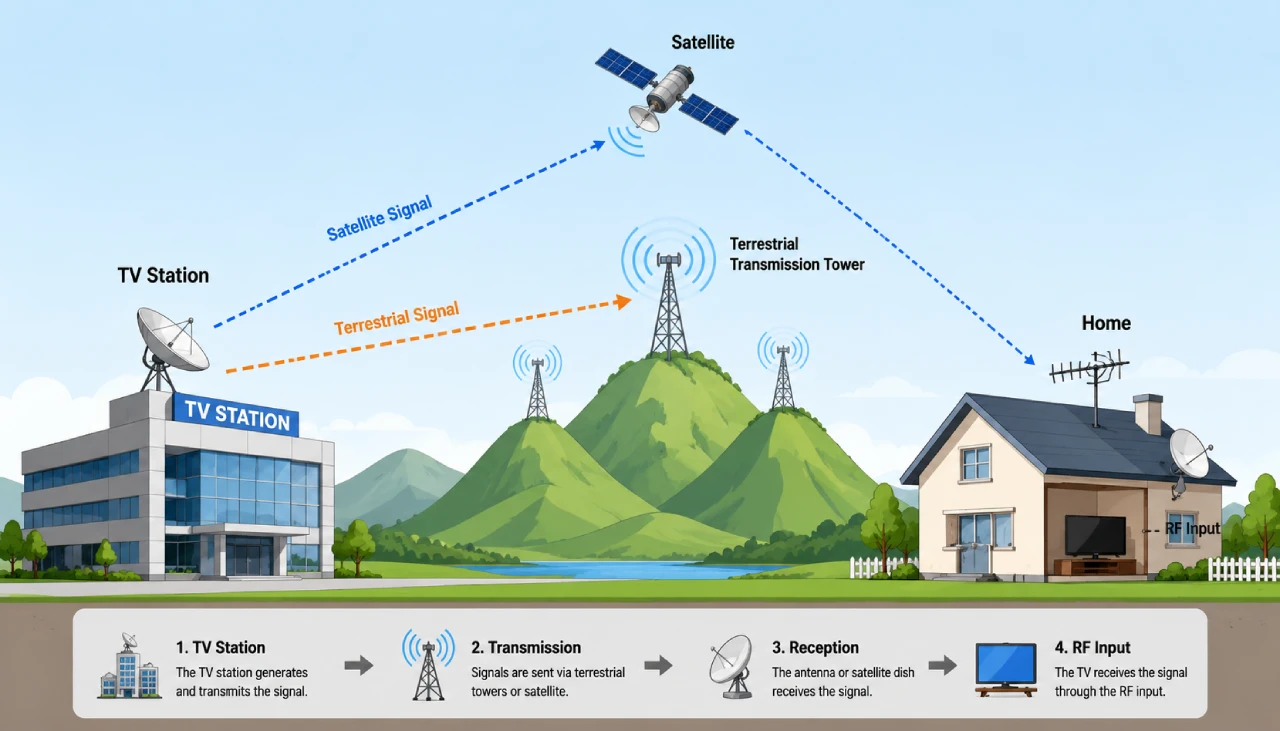
From the birth of television in the early 20th century to the rise of smart TVs and internet streaming platforms in recent decades, televisions mainly received content through RF, short for Radio Frequency, broadcasting systems. This traditional method of television signal transmission has been used worldwide for generations.
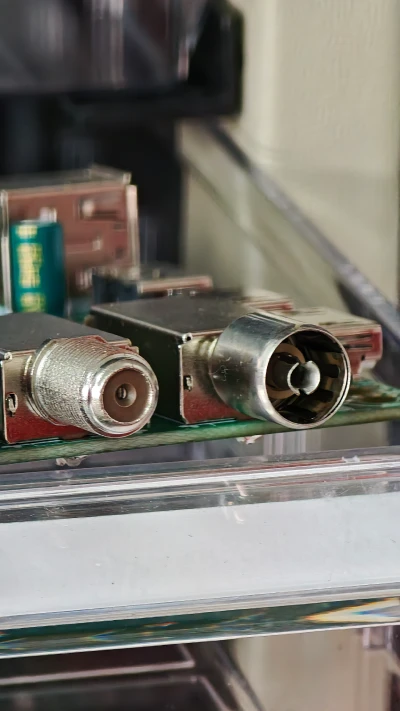
In an RF broadcasting system, TV signals are transmitted from terrestrial towers, cable operators, or satellites, and received directly by the television through a built in tuner.
Users typically connect the TV to:
- An antenna for terrestrial broadcasting
- A cable TV line
- A satellite receiver system
The television tuner then decodes the signal and displays the available channels on screen.
Although modern streaming platforms are growing rapidly, RF broadcasting remains an important part of the television industry in many countries. Today, RF television systems generally fall into two categories: Analog TV and Digital TV.
Analog TV
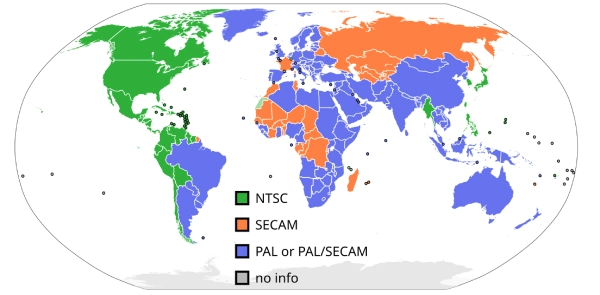
Analog television was the original global television broadcasting standard. Different regions adopted different analog systems, including PAL, NTSC, and SECAM.
In many developed markets, analog broadcasting has already been phased out and replaced by digital television systems. However, analog TVs are still used in some regions and commercial applications due to their lower hardware cost and compatibility with existing equipment.
In certain emerging markets, consumers may still purchase analog TVs even when digital broadcasting standards such as DVB T2 or DVB S2 are available locally. This can happen for several reasons:
- Existing analog set top box ecosystems
- Lower television costs
- Use of external receivers
- Consumer preference for streaming apps instead of local broadcast channels
In these cases, the television functions mainly as a display device while the actual signal decoding is handled externally.
Digital TV
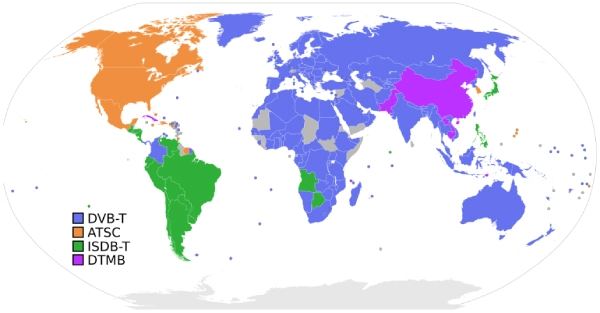
Digital television is the modern evolution of RF broadcasting. Instead of transmitting analog signals, digital TV systems send compressed digital data, allowing for higher picture quality, more channels, and improved signal efficiency.
Different regions use different digital broadcasting standards, including:
- DVB-T2
- DVB-S2
- DVB-C
- ATSC
- ISDB-T
Compared with analog TV, digital broadcasting supports HD and 4K content, electronic program guides, multi language audio, and better signal stability.
Even today, digital RF broadcasting remains widely used for free to air television, satellite broadcasting, and public television services around the world.
What Is IPTV?
IPTV stands for Internet Protocol Television. Unlike traditional RF broadcasting, IPTV delivers television content through IP based networks.
However, IPTV does not simply mean watching videos through internet apps. In the television industry, true IPTV systems are usually operated and controlled by telecom providers or network operators.
In most IPTV systems, content is delivered through managed private networks rather than the open public internet. Users typically access IPTV services through operator provided set top boxes or integrated smart TV applications.
Common IPTV examples include:
- Telecom operator TV services
- ISP set top box systems
- Hotel IPTV systems
- Enterprise television networks
Compared with OTT streaming platforms, IPTV systems are generally more stable and controllable because the network infrastructure is managed directly by the service provider.
Typical IPTV advantages include:
- Stable transmission quality
- Lower latency compared with open internet streaming
- Better bandwidth management
- Centralized channel control
- Subscription based service models
Although IPTV uses internet protocol technology, it still differs significantly from OTT streaming services such as YouTube or Netflix. IPTV is usually part of a controlled television distribution ecosystem rather than an open consumer streaming platform.
What Is OTT?
OTT stands for Over The Top, a content delivery model where television and video services are transmitted directly through the open internet.
Unlike traditional RF broadcasting or operator controlled IPTV systems, OTT platforms do not rely on terrestrial broadcasting networks, satellite systems, or dedicated telecom infrastructure. Instead, content is streamed directly to users through internet connected devices.
Today, OTT has become the most familiar television experience for many consumers worldwide. Popular OTT platforms include:
- YouTube
- Netflix
- Prime Video
- Disney+
- TikTok
- Local streaming applications
Because OTT services operate through the internet, users can access large amounts of content without relying on traditional television broadcasting systems.
This also means that even televisions without built in DVB tuners can still provide a complete entertainment experience as long as they support internet connectivity and streaming applications.
In many emerging markets, this has changed the role of the television itself. Instead of functioning mainly as a traditional broadcast receiver, the TV increasingly acts as a smart display terminal for internet based content platforms.
This is one reason why some markets still accept lower cost Analog Smart TVs. In actual usage, consumers may spend most of their viewing time on YouTube, TikTok, Netflix, or local streaming apps rather than traditional RF broadcast channels.
Why Some Markets Still Buy Analog TVs
Although many countries have already adopted digital broadcasting standards such as DVB T2 or DVB S2, analog TVs still exist in certain markets around the world.
From a technical perspective, digital television systems provide better image quality, improved spectrum efficiency, and support for HD broadcasting. However, actual market demand is often influenced by cost structures, consumer behavior, and local infrastructure conditions rather than broadcasting standards alone.
Several factors may explain why analog TVs continue to be used in some regions:
- Existing external set top box ecosystems
- Lower television hardware costs
- Consumer preference for streaming applications
- Infrastructure differences between urban and rural areas
- Hotel and commercial display projects
- Government transition periods between analog and digital broadcasting
In many cases, consumers no longer rely on the television itself to decode broadcast signals directly. Instead, external devices such as DVB set top boxes, Android TV boxes, satellite receivers, or streaming devices handle the content reception process.
In many emerging markets, the TV itself is no longer the primary signal decoder. Instead, it becomes a display terminal connected to external content sources.
This trend has become even more visible with the growth of OTT streaming platforms. In some markets, consumers spend more time using YouTube, TikTok, Netflix, and local streaming apps than watching traditional RF broadcast channels. As a result, lower cost Analog Smart TVs may still remain commercially attractive in specific applications and regions.
The Future of Television Reception
The future of television reception will increasingly depend on internet connectivity, cloud based platforms, and streaming ecosystems. As broadband infrastructure improves around the world, OTT and IPTV services are becoming a larger part of everyday television usage.
Modern smart TVs are no longer limited to traditional broadcasting. Consumers can instantly access global content platforms, streaming apps, cloud gaming services, and online video libraries directly from the television interface.
However, RF broadcasting is unlikely to disappear completely.
Traditional broadcasting systems still play an important role in:
Free to air television services
Emergency broadcasting systems
Rural and remote area coverage
Low bandwidth regions with limited internet infrastructure
Digital RF systems such as DVB T2 and DVB S2 continue to provide efficient large scale content distribution, especially in regions where stable internet access is not always guaranteed.
From my perspective, television may never fully separate from RF broadcasting. While smart TV platforms offer great convenience, modern streaming ecosystems are often filled with endless short form content and recommendation driven feeds.
Traditional RF broadcasting works differently. It is based on scheduled television channels rather than algorithm driven short videos. Viewers usually watch complete programs, news broadcasts, documentaries, or full episodes instead of rapidly switching between hundreds of fragmented clips.
This difference may become increasingly important, especially for children. Watching complete long form programs may help develop stronger attention span and more structured cognitive habits compared with continuous short video consumption.
For this reason, traditional broadcasting and internet streaming may continue to coexist for many years, each serving different viewing habits, infrastructure conditions, and social needs.
| Type | Transmission Method | Network Control | Latency | Typical Examples |
|---|---|---|---|---|
| RF Broadcasting | Broadcast Network | Broadcaster | Very Low | DVB / Analog |
| IPTV | Dedicated IP Network | ISP / Operator | Low | Telecom IPTV |
| OTT | Open Internet | Uncontrollable | High | YouTube / Netflix |
FAQ
1. If a Smart TV can already stream Netflix and YouTube via Wi-Fi, why do manufacturers still include RF tuners (like DVB-T2 or ATSC)?
While OTT streaming platforms have become the primary entertainment source for many, RF tuners remain a fundamental component of televisions for three critical reasons: cost-free access, emergency resilience, and infrastructure limitations. RF broadcasting (Free-to-Air TV) provides universal access to news, sports, and local programming without requiring a paid internet subscription or consuming data bandwidth. Furthermore, during natural disasters or network outages, internet and cellular infrastructure can easily fail, whereas terrestrial broadcasting networks are highly resilient and serve as the government’s primary channel for emergency alerts. In many regions, regulatory bodies still mandate these tuners to ensure no citizen is left without access to public broadcasting.
2. Why do some emerging markets and commercial buyers still purchase Analog TVs when their countries have already transitioned to Digital Broadcasting (DVB/ISDB)?
This seemingly outdated purchasing behavior is actually driven by pragmatic market economics. In many emerging markets and commercial sectors (like budget hotels or rural hospitals), the TV is no longer expected to act as the primary signal decoder—it is purely a display terminal. There are two main scenarios driving this demand:
The Set-Top Box (STB) Ecosystem: Consumers or operators already own millions of legacy analog or hybrid set-top boxes provided by local cable networks. Upgrading the television to a costly DVB-T2 model is redundant when the existing box handles all decoding and connects via standard AV interfaces.
The Shift to OTT-Only Usage: In areas with decent mobile internet or Wi-Fi, consumers bypass traditional broadcasting entirely. They buy low-cost Analog Smart TVs because they only intend to use pre-installed apps like YouTube or local streaming services. Paying a premium for an integrated digital tuner that will never be plugged into an antenna makes no financial sense for these buyers.
3. Is watching a live TV channel app on my Smart TV considered IPTV or OTT? What is the technical difference?
Watching a live TV app over a standard internet connection is actually OTT (Over-The-Top) streaming, not true IPTV, even though both deliver video via Internet Protocol.
The technical distinction lies in network control and Quality of Service (QoS):
True IPTV is a managed service provided by your internet service provider (ISP) or telecom operator. It runs on a dedicated, closed private network and often requires a specific operator set-top box. Because the ISP controls the entire network path, it guarantees bandwidth, resulting in near-zero buffering and very low latency.
OTT Streaming (like YouTube TV, Netflix, or standalone network apps) delivers content over the open public internet. The content provider has no control over your internet routing or bandwidth congestion. While highly flexible and accessible on any device, OTT inherently suffers from higher latency and is susceptible to buffering during peak internet traffic times.


Consider buying traditional RF TVs for B2B Business?