-
Tel/Wechat/Whatsapp +86 13926285591
-
Email hanke@opeetv.com

-
Tel/Wechat/Whatsapp +86 13926285591
-
Email hanke@opeetv.com
TV Factory or Trading Company? How to Identify Your Real TV Manufacturer
Finding a TV supplier is easy. Knowing who actually manufactures your TVs is much harder.
A supplier may describe itself as a factory, show professional product photos or even arrange a factory visit. However, before placing a bulk OEM or ODM order, buyers should understand who actually operates the production facility, controls quality and takes responsibility for the final products.
In this guide, we explain practical ways to distinguish a real TV manufacturer from a trading company, verify the relationship between a supplier and a factory, and identify who is actually responsible for your order.
This guide is based on our experience as a TV manufacturer. Over the years, many buyers have asked us to prove our factory capabilities, production processes and quality control before starting cooperation. The questions and verification methods in this article are based on the same checks experienced buyers often use when evaluating a TV supplier.
The company selling you TVs is not always the company that actually manufactures them.

See the factory WIth Your Own Eyes
When you find a TV supplier through a B2B platform or social media, one of the fastest ways to begin verification is to ask for a live video meeting.
Try requesting the call during normal working hours in China, ideally between 9:00 AM and 6:00 PM Beijing time. Ask the sales representative if they can show you the factory live.
The response itself can sometimes provide useful information. A sales representative working inside or close to the production facility may be able to arrange a quick video call, either by showing you the factory directly or asking a colleague on the production floor to help. This can sometimes be arranged within a few minutes.
If the supplier needs a much longer time to arrange the call or repeatedly provides reasons for delaying it, this does not automatically mean that they are a trading company. However, buyers may want to ask why and continue with additional verification. In some cases, the sales team may work from a separate office and need time to travel to the actual factory.
During the video call, look beyond the showroom and product samples. Ask to see the actual assembly line, workers, TV aging areas, quality control stations, packaging operations and finished-goods storage. You can also ask what TV models are currently being produced and request to see them on the production line.
However, seeing a real factory is only the first step. A supplier may be able to show you a production facility without actually owning or operating it. The next step is to verify the relationship between the supplier and the factory.
A supplier who needs time to arrange a factory visit is not necessarily a trader. The important question is why the factory cannot be shown immediately during normal working hours.
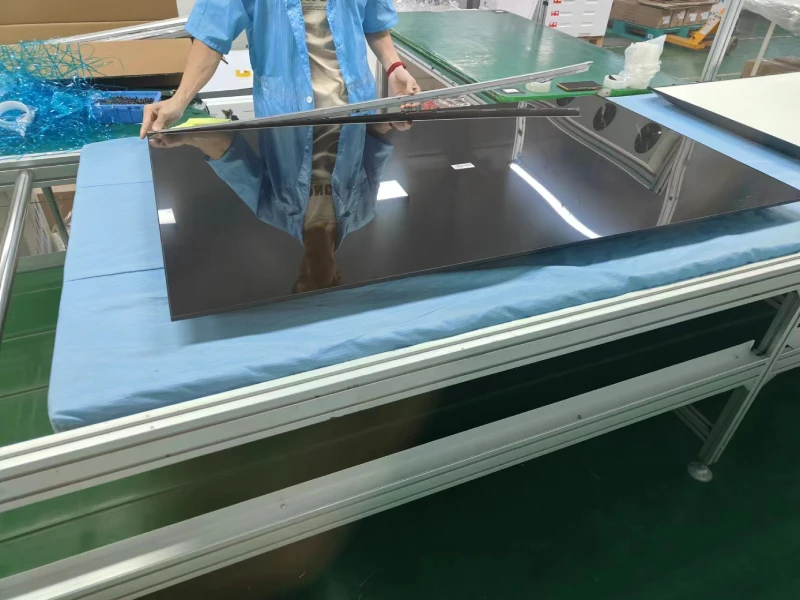
Verify That the Supplier Is Actually Connected to the Factory
Seeing a real TV production line is a good start. However, it does not automatically mean that the supplier you are talking to owns or operates that factory.
A supplier may be able to show you a real manufacturing facility for several reasons. They may own the factory, operate it through a related company, work closely with an independent factory or simply purchase products from that factory. These business models are different, and buyers should understand which one applies before placing an order.
Instead of simply asking, “Are you a factory?”, ask more specific questions.
Where Will My TVs Actually Be Produced?
Ask the supplier for the actual production address where your order will be assembled.
For a genuine manufacturer, providing the production address is normally a straightforward part of supplier verification. For a trading company, however, revealing the exact factory address can create a different concern.
Once a buyer knows the real production location, they can independently verify it. They may visit the factory themselves, search for the company operating at that address, or find another contact associated with the factory and use that information to cross-check what the original supplier has told them.
This creates an uncomfortable situation for an intermediary. If the supplier refuses to disclose the production address, the buyer may naturally wonder why the manufacturing location is being kept confidential. If the supplier provides the real address, the buyer has an opportunity to contact or verify the factory independently.
This does not mean that refusing to provide an address automatically proves that a supplier is a trading company. There may be legitimate reasons for protecting a manufacturing partner’s information. However, an unwillingness to clearly explain where the TVs will actually be produced should be treated as a signal to investigate further.
A useful question to ask is:
What is the exact production address where my TVs will be manufactured?
Once you have the address, do not stop there. Use it as an independent verification point and compare the information you receive from different sources.
What Is Your Role in the Company?
Another useful detail is to understand exactly who you are communicating with.
When you first contact a supplier, do not only record the company name. Record the salesperson’s full name, position, business email, phone number and other contact information.
For example, if a salesperson introduces themselves as an export sales manager, you can ask:
What is your role in the company?
You can then use the information later to verify whether the person actually works for the company.
Try checking the salesperson through different sources, such as the company’s official website, business email domain, B2B platform profile or professional networking profiles. You can also contact the company through another channel and ask whether the salesperson is part of the sales team.
This becomes especially useful when you are dealing with a new supplier for a large OEM or ODM order. The person you communicate with should have a traceable connection to the company they claim to represent.
You do not need to treat the absence of a salesperson’s profile as proof that something is wrong. Smaller companies may not publish their employees online. The purpose is simply to create another verification point.
Supplier Identity ≠ Manufacturing Identity
The company name on a quotation is only one part of the picture. Record the people, contact details and production location connected to your supplier, then use those details to verify the information from different sources.
Test Whether the Supplier Understands the Manufacturing Process
A supplier may be able to show you a factory, but that is not the only thing you can verify during a conversation.
Pay attention to how the salesperson talks about the TVs they are selling. You do not need to expect every salesperson to be an engineer. However, someone who regularly works with a real TV manufacturer should normally understand the products, the basic manufacturing process and common quality issues.
Product Knowledge
Start with simple questions about the TV itself.
Ask about the panel supplier, chipset, memory, operating system, backlight technology, tuner, resolution and other key specifications. You can also ask why a particular configuration is used for a specific model or market.
A salesperson who works closely with TV production should normally be able to explain these details clearly, or quickly connect you with the appropriate technical person.
Listen for industry-specific terms.
Depending on the market and product, an experienced TV salesperson should be familiar with terms such as ATSC, ISDB, DVB-T2, double glass, A+ panel, new panel, no bright dot, remote control specifications, and other terminology related to TV manufacturing industry, broadcast standards and quality requirements.
You do not need to know every technical term yourself. The point is to see whether the supplier can understand these terms and explain how they relate to your product requirements.
If you are not very familiar with the TV industry, do not worry. We have prepared a detailed guide explaining common TV terminology, specifications and manufacturing terms in simple language.
Manufacturing Knowledge
Go beyond product specifications and ask how the TV is actually made.
For example, ask about assembly, aging tests, production capacity, testing procedures or how a customized OEM configuration would be handled.
You are not trying to test whether the salesperson can operate a production line. You are checking whether their answers show real familiarity with the manufacturing process behind the products they sell. You can simulate how a regular TV manufacturing process in our article below:

QC Questions
Quality control is another useful way to test the supplier’s manufacturing knowledge.
Ask how they check panels, appearance, functions, software, ports and finished TVs before packaging. You can also ask how long the TVs normally undergo aging tests and how defective units are handled.
A supplier closely involved with production should be able to explain the basic QC process and tell you who is responsible for each stage.
Follow the Contract, Payment and Responsibility
Before placing an order, check whether the company you are communicating with is the same company that appears on the contract and receives your payment.
Check the Contracting Company
Look carefully at the company name and legal entity shown on the quotation and sales contract.
Is it the same company you have been communicating with? Does the company name match the supplier’s website, business information and other documents?
If a different company appears on the contract, ask the supplier to explain the relationship and why that company is handling the transaction.
Check Who Receives Your Payment
Before making payment, check the name of the bank account receiving your money.
If you are communicating with Company A, but the contract is signed by Company B and payment is requested to Company C, you should understand why these companies are involved and what their respective responsibilities are.
This becomes especially important if there is a quality dispute, warranty issue or other after-sales problem. You should know which legal entity is responsible for the order and who you can hold accountable under the contract.
Ideal Situation
CONTRACTING COMPANY = PAYMENT RECIPIENT COMPANY
If not, any difference must be clearly explained.
IMPORTANT: Check Whether Different Supplier Identities Lead to the Same Manufacturing Source
When sourcing TVs from China, buyers often contact several suppliers at the same time. These suppliers may use different company names, B2B profiles and sales contacts.
However, different supplier identities do not always mean different manufacturing sources.
You may sometimes discover that several apparently independent suppliers are connected to the same factory or manufacturing group. This is not automatically a problem, but it is something buyers should understand before using those suppliers for price and factory comparisons.
Why Is This Important?
Imagine that you contact Supplier A, Supplier B and Supplier C because you want to compare prices, MOQ, lead time and production capabilities.
You believe you are comparing three independent suppliers.
Later, you discover that all three are connected to the same manufacturing source. It also means that the manufacturer has 3 chances to take this order with different price lists.
Your supplier comparison may no longer be as independent as you originally thought. Different sales channels may offer different prices or commercial terms, while the actual manufacturing source remains the same.
This does not automatically mean that the suppliers are doing anything improper. The important point is that, as a buyer, you should know whether you are comparing several genuinely independent manufacturing sources or different supplier identities connected to the same source.
Check with public information
Start with public company information. Compare the registered company names, registered addresses, legal representatives and other available business information.
You may find situations where two apparently independent suppliers are registered in the same building, such as one company on the third floor and another on the fourth floor. This alone does not prove that they are connected, but it is a useful signal for further investigation.
You can also pay close attention during video calls.
Do not only look at the TV products being shown. Observe the office layout, showroom, factory entrance, production line, wall signs, packaging area, equipment and even workers’ uniforms.
If you speak with several different suppliers and repeatedly see the same office environment, factory layout, signage or other physical details, you may have found a connection worth investigating.
These details do not prove that different suppliers are the same company. However, when several independent signals point in the same direction, buyers should ask more questions before assuming they are dealing with completely separate manufacturers.
A useful tip: Many B2B platforms allow visitors to view the registered company information behind a supplier profile or store. You can create a simple comparison list and check the legal company names, registered addresses and other available business details across different suppliers.
This can make it surprisingly easy to identify cases where several seemingly different supplier stores are operated by, or connected to, the same company or manufacturing source.
Additional Useful Methods to Verify a TV Supplier
The checks above are more important, but a few additional details can also help you evaluate a supplier. These signals should not be treated as proof on their own, but they can provide useful clues when combined with other verification methods.
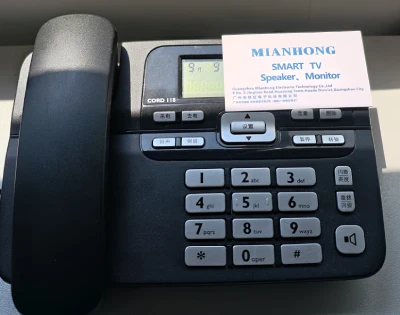
Check for a Fixed Business Landline
Ask whether the company has a fixed office phone or business landline.
A fixed business phone does not prove that a supplier is a manufacturer, and many legitimate companies mainly use mobile phones or messaging apps. However, if a supplier claims to operate an established manufacturing business but has no identifiable office contact information, it may be worth asking a few more questions.
Check the Email Domain
Pay attention to the email address used for quotations and business communication.
An established supplier will often use a company-domain email such as sales@company.com rather than a personal Gmail or Hotmail address.
A personal email does not automatically mean that the supplier is a trading company. However, when combined with other unusual signals, it is another detail worth verifying.
The Most Important Question: Who Actually Manufactures Your TVs?
When evaluating a TV supplier, the most important question is not simply whether the company calls itself a manufacturer.
The more important question is:
Who actually manufactures your TVs?
You can start by seeing the factory with your own eyes. Then pay attention to whether the supplier understands the products and manufacturing process. Verify the connection between the salesperson, the company and the production facility. Check the company named on your contract, the account receiving your payment and the entity responsible for quality and after-sales service.
When comparing multiple suppliers, also look beyond the product itself. Check company registration information, physical locations and other details that may reveal whether several supplier identities are actually connected to the same manufacturing source.
None of these checks alone can tell you everything about a supplier. Together, however, they can give you a much clearer picture of who is actually behind your order.
A trading company is not necessarily a bad supplier, and a company calling itself a factory is not automatically a good one. What matters is transparency.
As a buyer, you should know who you are dealing with, where your TVs are produced, who receives your payment and who will take responsibility for the products you receive.
That is the difference between simply finding a TV supplier and understanding your actual manufacturing source.
FAQ
1. How can I tell if a TV supplier is a real factory?
Ask for the actual production address and arrange a live video call from the factory during working hours. Ask to see the assembly line, QC stations, aging areas, packaging area and finished goods. You should also check whether the salesperson understands the TV specifications and manufacturing process.
2. Can a trading company provide a factory video?
Yes. A trading company may work with a legitimate TV factory and arrange a factory visit or video call. Seeing a real factory does not automatically prove that the company you are dealing with owns or operates that factory. You should also verify the relationship between the supplier, salesperson and manufacturing company.
3. Should the company on the contract be the same as the factory?
Not necessarily. Some businesses use different legal entities for sales, manufacturing or payment. However, the relationship between these companies should be clearly explained and documented. Before making a large payment, you should know which legal entity is responsible for your order, quality and after-sales service.
4. How can I check whether two TV suppliers use the same factory?
Compare their registered company names, business addresses and other available company information. During factory or video meetings, also look for repeated physical details such as office layouts, factory entrances, wall signs, production lines, packaging areas and equipment. Several matching signals may indicate that apparently different suppliers are connected to the same manufacturing source.
5. Is it bad to buy TVs from a trading company?
No. A trading company is not automatically a bad supplier. Some trading companies work with reliable manufacturers and can provide useful sourcing and export services. The important thing is transparency. Before placing an order, you should know who actually manufactures the TVs, where they are produced, who receives your payment and who is responsible for quality and after-sales service.


Want to build your own TV brand?
Upload your LOGO, we design and provide a set of images(TV bezel, TV boot screen, color box) to your email.(100% Free)