-
Tel/Wechat/Whatsapp +86 13926285591
-
Email hanke@opeetv.com
-
Tel/Wechat/Whatsapp +86 13926285591
-
Email hanke@opeetv.com
TV Backlight Types Explained: DLED vs ELED vs Mini LED vs QLED vs RGB LED
When comparing LED TVs, many buyers focus on screen size and resolution, but one key parameter is often misunderstood: Backlight Type.
Terms such as ELED, DLED, Mini LED, QLED, and the emerging RGB LED backlight are increasingly used in TV product descriptions. However, these technologies are often confused with panel technologies. In most cases, they describe how an LCD display is illuminated, controlled, or enhanced by its backlight system, rather than the LCD panel itself.
From traditional Edge-lit LED and Direct LED backlighting to Mini LED local dimming, Quantum Dot enhancement, and the latest RGB LED backlight technologies, TV backlight systems continue to evolve to improve brightness, contrast, color performance, and overall picture quality.
In this article, we explain the differences between these technologies in a clear and practical way, especially from a manufacturer and wholesale perspective, helping TV buyers, importers, and brands better understand what each technology actually means when sourcing or comparing LCD TVs.
What Is ELED (Edge-lit LED)?
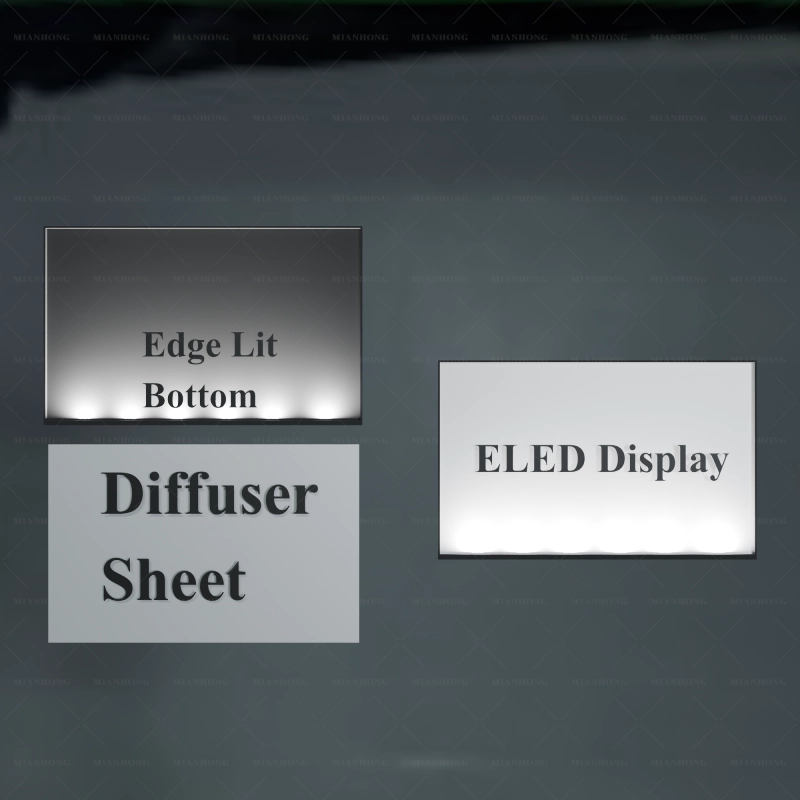
ELED, short for Edge-lit LED, is a backlight design where the LED light sources are placed around the edges of the screen instead of behind the entire panel. The light is then guided across the screen using light guide plates and optical films.
LED light sources are positioned at the bottom edge of the panel, and the light is distributed across the screen through a diffuser sheet to achieve overall illumination.
Key characteristics of ELED:
LED chips are positioned along the edges of the display
Enables ultra-thin TV designs
Lower contrast and brightness uniformity compared with DLED
Lowest cost among common LED backlight solutions
Typical markets for ELED TVs:
Entry level LED TVs
Lower Price for distribution channels
Markets where slim appearance is prioritized over picture uniformity
From a manufacturing perspective, ELED is now rarely used in new TV models, primarily due to concerns about long-term reliability.
Because the light sources are concentrated at the edges, heat can accumulate over time, which may damage optical films such as the diffuser film or brightness enhancement film. This can result in brightness decay, yellowing, or uneven illumination after extended use.
At least within our own TV manufacturing process, ELED backlight solutions have already been phased out. We no longer adopt ELED structures in new production models, as they do not meet our long-term reliability standards.
Although ELED designs can achieve an extremely slim profile, DLED backlight technology has also continued to evolve. One important concept in modern DLED design is OD (Optical Distance), which refers to the distance between the backlight module and the LCD panel.
Through continuous optimization of backlight structure and optical materials, our current DLED solutions can achieve an OD of approximately 20 mm. This allows us to maintain excellent brightness uniformity and display performance, while also balancing slim cabinet design and container loading efficiency—making DLED a more practical solution for both product performance and logistics.
What Is DLED (Direct LED Backlight)?
DLED, or Direct LED, uses LED chips arranged directly behind the LCD panel, distributing light more evenly across the entire screen. This structure improves brightness uniformity and thermal management compared with edge-lit designs.
Key characteristics of DLED:
LEDs placed across the full back area of the panel
More uniform brightness and better contrast
Slightly thicker than ELED, but more stable
Better heat dissipation and longer lifespan
Cost remains well-controlled for mass production
Current market trend:
Today, most LED TV production has shifted to DLED, as it offers a better balance between cost, performance, and durability. For mainstream and emerging markets, DLED has become the standard backlight solution for reliable, long-term use.
The LEDs are uniformly attached to the back cabinet, ensuring balanced light distribution and thermal performance.
What Is OD (Optical Distance) in DLED Backlight Design?
OD, short for Optical Distance, refers to the physical distance between the backlight module and the LCD panel. In a DLED backlight structure, OD plays a critical role in balancing panel thickness, brightness uniformity, and thermal performance.
A larger OD allows light from the LED strips to spread more evenly before reaching the panel, which helps improve uniformity. However, it also increases the overall thickness of the TV cabinet. Reducing OD requires more precise optical design, including optimized diffuser films, light distribution patterns, and LED layout.
With improvements in backlight structure and optical materials, modern DLED solutions are able to achieve much smaller OD values than before. In our current manufacturing process, the OD has been reduced to around 20 mm, while still maintaining stable brightness and uniform light distribution.
This optimized OD design allows DLED TVs to remain relatively slim, while preserving the advantages of direct backlight structures. It also improves thermal balance and supports practical considerations such as cabinet design efficiency and container loading, making DLED a well balanced solution for both display performance and large scale production.
A 20 mm OD results in a slimmer cabinet compared with a 28 mm OD design.
Loading Quantity Comparison With Different OD
| Our TV Model | OD (mm) | Loading Capacity per 40HQ Container |
|---|---|---|
| 3215KX | 28 | 2400 units |
| 3215K2 | 20 | 2720 units |
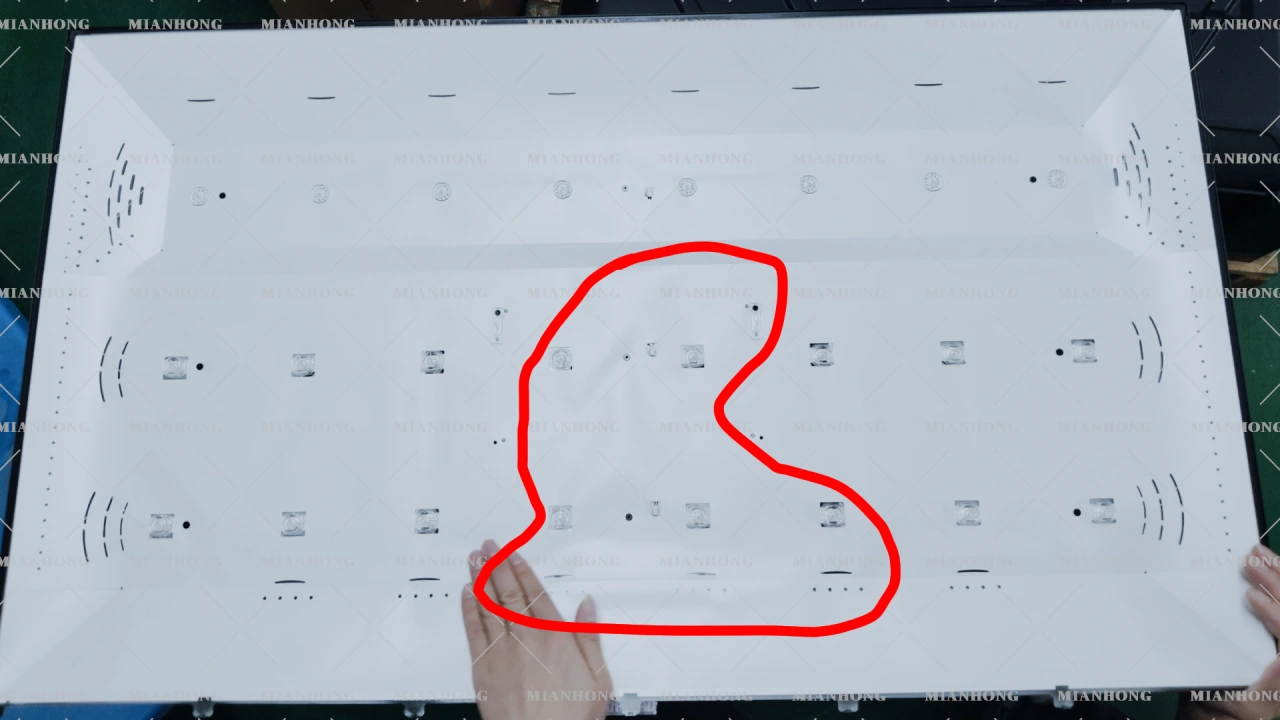
Although an OD of 20 mm brings many advantages, it also introduces higher manufacturing challenges for our customers. With such a thin distance between the backlight and the LCD panel, installing the diffuser sheet becomes more difficult. Any slight unevenness or bumps in the diffuser can result in visible bright spots or light shadows once the TV is fully assembled.
This is why, while smaller OD values improve cabinet slimness and container loading efficiency, careful production processes and precise optical alignment are required to maintain consistent display quality.
The red circle highlights a raised area caused by installation difficulty. If not corrected, it can produce uneven bright spots in the finished TV.
What Is MiniLED Backlight?
Mini LED is an advanced backlight technology for modern LED TVs. It uses much smaller LED chips than traditional DLED, enabling hundreds or thousands of local dimming zones. This allows higher brightness, better contrast, and precise light control, while keeping the underlying LCD panel.
Mini LED can deliver near-OLED performance in contrast and HDR, while retaining LCD advantages such as durability and cost-effectiveness for mass production.
Any backlight TV that supports local dimming can be considered a Mini LED TV. The presence of local dimming allows the TV to control brightness in different zones independently, which is the core advantage of Mini LED technology. Of course, the number of LED chips and the number of dimming zones will determine the ultimate display performance and the product price.
From a manufacturing perspective, this means that not all Mini LED TVs are created equal. TVs with more LEDs and more dimming zones can achieve better contrast, HDR performance, and more precise light control, but they also require more complex optical design and higher production cost.
In my view, when explaining Mini LED to customers, it is useful to focus on the functionality of local dimming and its effect on the picture, rather than just the term “Mini LED,” because the actual viewing experience depends on the implementation details.
DLED TV(left) vs Miniled TV(right). The mini LED does a better job on contrast due to local dimming technology.
Local dimming demonstration in a Mini LED backlight.
Backlight zones light up only where brightness is needed, improving contrast by keeping dark areas unlit.
Mini LED Strip vs Mini LED Backlight Board
In practical production, Mini LED backlights are mainly implemented in two structural forms: Mini LED strip designs and Mini LED backlight board designs. While both support local dimming, their structure and manufacturing requirements differ.
Mini LED strip designs place Mini LED chips on strip modules, similar to traditional DLED layouts but with much higher LED density. This approach offers flexibility in layout and cost control, making it suitable for a wider range of screen sizes and market positions.
Mini LED backlight board designs mount Mini LED chips directly onto a full backlight PCB. This allows extremely dense LED placement and finer dimming zones, resulting in better brightness uniformity and contrast. However, it also increases production complexity, cost, and thermal management requirements.
| Item | Mini LED Strip | Mini LED Backlight Board |
|---|---|---|
| LED arrangement | Mini LEDs mounted on strip modules | Mini LEDs mounted on full PCB board |
| Local dimming zones | Medium to high | High to very high |
| Brightness uniformity | Good | Very good |
| Manufacturing complexity | Moderate | High |
| Cost level | Controlled | Higher |
| Typical positioning | Mainstream to upper mid range | High end and flagship models |
What is QLED Backlight(Quantum)?
QLED is widely used in LED TVs to enhance color performance, especially color gamut and peak brightness. By improving how light is converted into red and green components, QLED TVs are able to display more vivid and saturated colors, which is particularly noticeable in HDR content.
It is important to note that QLED does not change the LCD panel itself. It is a color enhancement technology that works together with the backlight system.
Photoluminescent QLED Using Quantum Dot Film
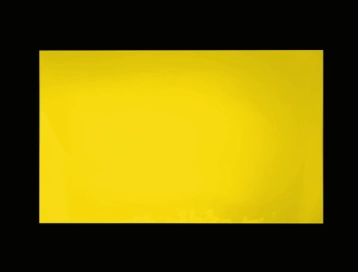
The most common and currently mass-produced QLED solution is based on photoluminescence. In this design, blue LED chips are used as the backlight source. A quantum dot film, which appears slightly yellow, is placed in the optical stack.
When blue light passes through this quantum dot film, part of the light is converted into highly pure red and green wavelengths. The remaining blue light, together with the converted red and green light, forms a wider and more accurate color spectrum. This method significantly improves color gamut while keeping the backlight structure relatively simple and stable.
From a manufacturing perspective, this approach is mature, reliable, and compatible with DLED and Mini LED backlight designs. It is also the most widely adopted QLED implementation in today’s TV market.
QDEF contains red and green quantum dots. Blue light emitted from the LED backlight passes through the film, where part of the blue light is converted into red and green wavelengths. The remaining blue light, together with the converted red and green light, forms a wider color gamut white light.
Electroluminescent QLED Technology
Another QLED concept is based on electroluminescence, where quantum dot materials emit light directly when an electric current is applied. In theory, this approach allows each color to be generated without relying on a blue backlight or color conversion films.
Electroluminescent QLED has the potential to offer higher efficiency, more precise color control, and simplified optical structures. However, this technology still faces major challenges, including material stability, lifespan, and large scale manufacturing consistency. As a result, it has not yet reached commercial mass production and remains primarily in the research and development stage.
What Is QD Mini LED Backlight?
QD Mini LED combines the advantages of Mini LED backlight technology and quantum dot color enhancement into a single display solution. By using a Mini LED backlight with local dimming together with a quantum dot film, QD Mini LED TVs are able to deliver higher brightness, improved contrast, and wider color gamut compared with conventional LED TVs.
From a structural point of view, QD Mini LED does not introduce a new panel type. It remains an LCD TV, but with a more advanced backlight system and optical layer design. This combination allows manufacturers to balance picture quality, production stability, and scalability, making QD Mini LED a practical choice for high performance large size TVs.
What Is RGB LED Backlight and How Does It Work?
RGB LED backlight is an emerging direction in LCD TV backlight technology that builds on the development of Mini LED systems. While conventional Mini LED backlights typically use a large number of small white LEDs to provide high brightness and precise local dimming, RGB LED backlights use separate red, green, and blue LED light sources.
By combining a large number of small RGB LEDs into a dense backlight array, the system can independently control not only brightness but also the color of the light produced behind different areas of the LCD panel. When combined with Mini LED-style local dimming, this allows for much more precise control of both luminance and color compared with conventional white LED backlights.
The result is higher color volume, improved color purity, and more vivid color reproduction, especially in bright scenes where traditional display technologies can struggle to maintain both high brightness and rich color. With sufficiently dense RGB LED arrays and advanced local dimming algorithms, RGB LED LCD TVs can deliver a more pixel-like level of color control and picture performance that aims to narrow the gap between high-end LCD and OLED displays.
From a TV manufacturing perspective, RGB LED backlight technology can be viewed as one of the next development paths for Mini LED TVs. Instead of simply increasing the number of white Mini LEDs and dimming zones, manufacturers can also introduce RGB light sources to improve color performance directly at the backlight level.
Conclusion
Understanding different TV backlight technologies helps avoid many common misunderstandings in the market. From ELED and DLED to Mini LED, QLED, QD Mini LED, and emerging RGB LED backlight systems, the key differences lie in how light is generated, distributed, enhanced, and controlled, rather than in the LCD panel itself.
As LCD backlight technology continues to evolve, manufacturers are moving beyond simply increasing brightness. Modern backlight designs increasingly focus on a combination of brightness uniformity, local dimming precision, color performance, thermal management, manufacturing complexity, and logistics efficiency. Conventional DLED remains a practical solution for large scale TV production, while Mini LED introduces more precise brightness control through dense LED arrays and local dimming. QLED and QD Mini LED further improve color performance, while emerging RGB LED backlight technology represents a new direction for high end LCD displays by introducing more direct control of red, green, and blue light at the backlight level.
From a manufacturing perspective, there is no single backlight technology that is suitable for every TV product. The right solution depends on target price, screen size, product positioning, required picture performance, production scalability, and long term reliability.
As RGB LED and advanced Mini LED technologies continue to develop, the performance gap between LCD and self emissive display technologies is expected to narrow further. However, choosing the right backlight type should always be based on actual application requirements and market positioning, rather than on technology terminology alone.
| Backlight Type | Color Performance | Max Brightness | Local Dimming | Price |
|---|---|---|---|---|
| ELED | Medium | Medium | No | Lowest |
| DLED | Good | Good | No | Low |
| Mini LED | Good | High | Yes | Medium |
| QLED | Very Good | High | Depends on backlight | Medium |
| QD Mini LED | Excellent | Very High | Yes | High |
| RGB LED Backlight | Excellent | Very High | Yes | High to Very High |
FAQ
1. Is QLED a panel technology or a backlight technology?
QLED is not a panel technology. It is a color enhancement solution that uses a quantum dot film to improve color gamut and brightness. The underlying display is still an LCD panel combined with a LED backlight.
2. Are all Mini LED TVs the same in picture quality?
No. While all Mini LED TVs support local dimming, the number of LED chips and dimming zones has a major impact on contrast, brightness control, and overall image quality. Higher zone counts generally result in better performance and higher cost.
3. Why is ELED rarely used in new TV models today?
ELED concentrates LED light sources at the edges, which makes heat dissipation more difficult over time. This can affect optical films and lead to brightness decay or uneven illumination, especially in large size TVs. For this reason, many manufacturers have shifted to DLED designs.
4. What does OD mean and why is it important in DLED and Mini LED TVs?
OD refers to Optical Distance, which is the space between the backlight module and the LCD panel. A smaller OD allows for a slimmer cabinet and better container loading efficiency, but it also requires more precise optical design and stricter manufacturing control.
5. What is the difference between Mini LED and QD Mini LED?
Mini LED improves contrast and brightness through dense backlight zones and local dimming. QD Mini LED combines Mini LED backlight with quantum dot film technology, further enhancing color gamut while maintaining the benefits of LCD based TVs.
6. Is RGB LED Backlight Better Than Mini LED?
RGB LED backlight technology can offer better color performance than conventional Mini LED because it uses separate red, green, and blue light sources instead of relying primarily on white LEDs. Combined with a dense LED array and local dimming, RGB LED backlighting can provide higher color volume, improved color purity, and more precise control of both brightness and color.
However, RGB LED is not automatically better in every TV. Actual performance depends on factors such as LED density, the number of dimming zones, the LCD panel, optical design, and the backlight control algorithm. RGB LED technology is also generally more complex and expensive to manufacture than conventional white Mini LED backlights.
Considering selling your own brand of TVs?
Upload your LOGO, we design and provide a set of images(TV bezel, TV boot screen, color box) to your email.(100% Free)