Top 15 Frameless TV Manufacturers & Suppliers in 2026

6mm distance between the display region and the frame edge, fairly small enough to be ignored.

Frameless TVs have become increasingly common across the global television market, with ultra-narrow bezels now appearing in everything from entry-level LED TVs to premium OLED and Mini LED models. As TV displays become larger and designs become slimmer, manufacturers continue to reduce the visual boundaries around the screen to create a more immersive viewing experience.

The leading frameless TV manufacturers in 2026 include Samsung, LG, Sony, TCL, Hisense, Xiaomi, Skyworth, Philips, Sharp, Panasonic, Vizio, Toshiba, Konka, Changhong and Mianhong TV. These companies represent a mix of global consumer TV brands and specialized manufacturers serving international OEM, ODM and private-label markets.

However, the best frameless TV manufacturer depends heavily on what you are looking for. Major consumer brands may be the right choice for premium retail products, while importers, distributors and new TV brands may need a manufacturer that offers OEM production, private labeling, customized software, packaging and market-specific configurations.

In this guide, we compare 15 leading frameless TV manufacturers and suppliers based on their TV product portfolio, frameless and ultra-narrow-bezel designs, technology, global market presence and suitability for different types of buyers.

Table of Contents

Top 15 Frameless TV Manufacturers & Suppliers at a Glance

The following table provides a quick overview of 15 well-known TV brands and manufacturers offering televisions with frameless, ultra-narrow-bezel or near-borderless designs. It compares a representative TV series from each brand, its country of origin and the smart TV platform commonly used for that product line.

Product availability, operating systems and model names may vary by market and product generation. The table is intended as a general reference for buyers researching the global frameless TV market in 2026.

BrandRepresentative Frameless TV SeriesOrigin CountryPlatform
SamsungNeo QLEDSouth KoreaTizen
LGOLED evo / OLED Gallery EditionSouth KoreawebOS
SonyBRAVIA XRJapanGoogle TV
TCLQD-Mini LED / C SeriesChinaGoogle TV / Roku TV
HisenseCanvasTV / ULEDChinaVIDAA / Google TV
XiaomiXiaomi TV S / Max SeriesChinaXiaomi HyperOS
SkyworthOLED / QLED SeriesChinaGoogle TV / Android TV
PhilipsAmbilight TV SeriesNetherlandsGoogle TV / Titan OS
SharpAQUOS SeriesJapanGoogle TV / Roku TV
PanasonicOLED / Mini LED SeriesJapanFire TV / Google TV
VizioM-Series / P-SeriesUnited StatesSmartCast
ToshibaC-Series / M-SeriesJapanFire TV
KonkaFrameless Smart TV SeriesChinaAndroid TV / Google TV
ChanghongQLED / Mini LED SeriesChinaAndroid TV / Google TV
Mianhong TV15K SeriesChinaAOSP / Google TV / webOS

What Does “Frameless” Actually Mean?

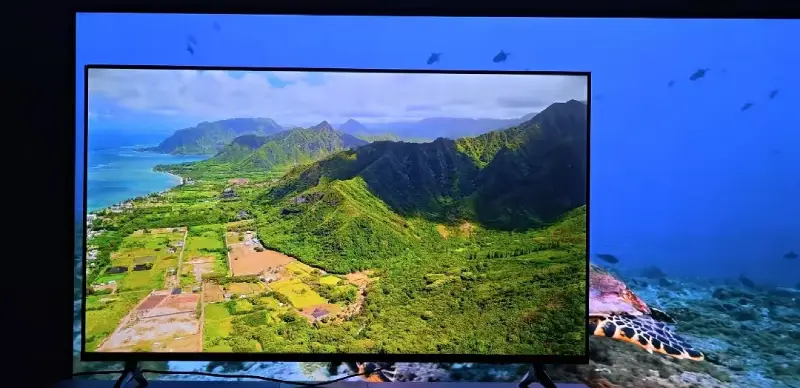
In the TV industry, the term “frameless” does not always mean that a television has absolutely no bezel around the screen. In most cases, it refers to a TV with an ultra-narrow bezel or a near-borderless front design that minimizes the visible frame surrounding the display.

The actual bezel width can vary significantly between manufacturers and models. A TV marketed as frameless may still have a thin black border around the LCD or OLED panel, as well as a narrow outer edge used to protect and support the display structure.

Terms such as “bezel-less,” “borderless,” “near-borderless” and “ultra-narrow bezel” are also commonly used in TV marketing. Although these terms may describe slightly different designs, they generally refer to the same goal: maximizing the visible screen area and reducing visual distractions around the display.

For B2B buyers, it is therefore important to check the actual product design, bezel width and front-view images rather than relying only on the term “frameless” when sourcing TVs from a manufacturer.

TV 15k model with frameless design
A standard Mianhong's 15k Series frameless model. The actual frame size is only 2mm wide.
Tempered glass TV showing the LCD panel and tempered glass thickness
A double glass model, the frame is extra large due to a second protective layer of tempered glass.

Why Is There Still a Black Border Around a “Frameless” TV?

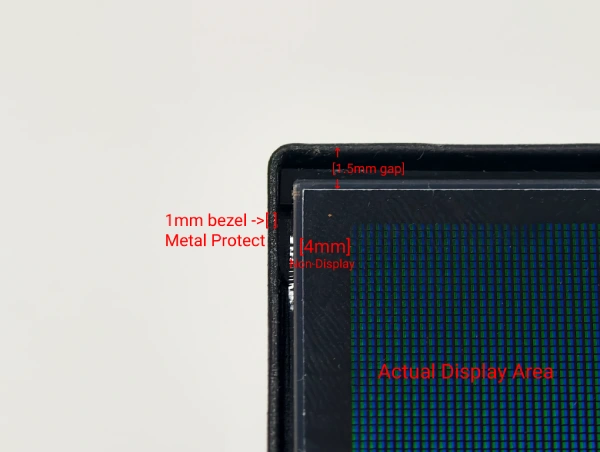
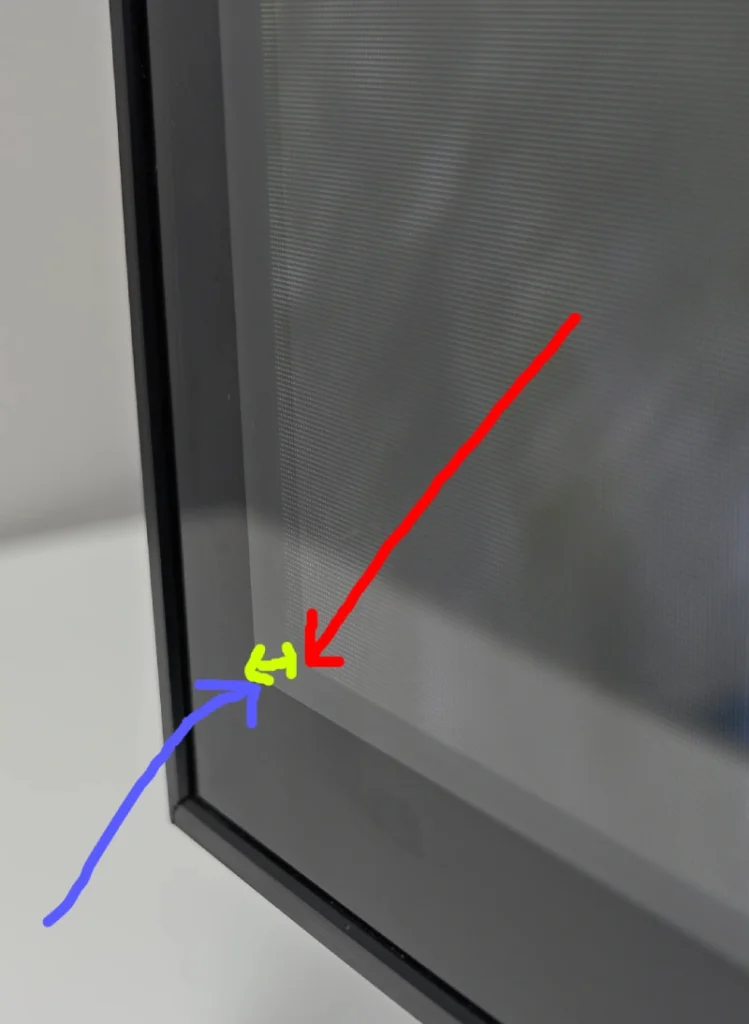
A “frameless” TV can still have a thin black border around the visible image. This is because the LCD panel itself contains a non-active area around the edges that does not display content.

The difference between the panel size and the actual display size includes this non-display area. It is required for the LCD panel structure, edge sealing and the placement of display-driving and connection components. The edge area also provides space needed to support and assemble the panel inside the TV.

For this reason, even a TV with an ultra-narrow outer bezel cannot always provide a picture that extends completely to the physical edge of the panel. When evaluating a frameless TV, buyers should distinguish between the external TV bezel and the LCD panel’s own non-active display area.

6mm distance between the display region and the frame edge, fairly small enough to be ignored.
Black border = Physical Size - Display Size.

Leading Frameless TV Manufacturers: Product & Market Overview

The manufacturers below represent a mix of global TV brands and specialized B2B TV manufacturers, each with a different approach to frameless design, display technology and smart TV platforms.

Samsung

Samsung is one of the most prominent manufacturers in the premium frameless TV segment, particularly through its Neo QLED lineup. Its high-end Neo QLED 8K models use Samsung’s Infinity Screen, Infinity One Design or newer Infinity Air Design to minimize the visible bezel and create a near edge-to-edge viewing experience.

Samsung has explicitly described its Neo QLED 8K TVs as having a “virtually no bezel” design, while some current models, such as the QN990F, are specified with a “Zero Bezel” design. Samsung’s Infinity Air Design is also described as providing a near edge-to-edge display with virtually no bezel.

LG

LG is another major TV manufacturer with a strong focus on slim, minimal-bezel OLED designs. Its OLED evo lineup, particularly the G and C series, combines self-lit OLED technology with an ultra-thin form factor and narrow visible bezels to create a highly immersive, screen-focused appearance.

LG has described its OLED designs as having extremely small bezels that are “practically undetectable,” with earlier OLED models featuring bezels as narrow as around 6 mm depending on the series and screen size. The 2026 OLED evo lineup continues this design approach, with the OLED evo G6 featuring a Zero Gap Flush-fit Gallery Design that sits closely against the wall, while the OLED evo C6 uses a slim bezel to maximize the visual area of the screen.

Sony

Sony’s BRAVIA lineup combines premium OLED and Mini LED display technology with minimalist industrial design. Several BRAVIA models use narrow-bezel or seamless-edge designs to keep attention focused on the picture, while Sony’s premium OLED and Mini LED TVs are positioned toward the high-end home entertainment market. Current BRAVIA models use Google TV, with the lineup covering OLED, Mini LED and LED technologies across different screen sizes.

Mianhong

Mianhong TV is a China-based TV manufacturer specializing in OEM and ODM production for international distributors, retailers and private-label brands. Its 15K Series is designed around a frameless, ultra-narrow-bezel appearance, with the visible frame kept to a minimum to create a larger and more immersive screen area. The series can be developed across different screen sizes and configurations, making it suitable for buyers looking for modern frameless TVs without being limited to a single consumer-market brand.

Unlike major consumer TV brands that primarily manufacture products for their own retail channels, Mianhong focuses on supplying TVs for B2B customers. The 15K Series can be adapted to different project requirements, including branding, packaging, remote controls, accessories, hardware configurations and available smart TV platforms. This makes the series particularly relevant to importers and private-label businesses that want to source frameless TVs under their own brand rather than purchase finished products from an established TV brand.

Conclusion

The frameless TV market includes a wide range of manufacturers, from global consumer electronics brands such as Samsung, LG, Sony, TCL and Hisense to specialized TV manufacturers serving OEM, ODM and private-label buyers.

For consumers, factors such as picture quality, display technology, design and smart TV features may be the most important considerations. For B2B buyers, however, manufacturing capability, product customization, certifications, MOQ, packaging and long-term supply support can be equally important.

There is no single best frameless TV manufacturer for every buyer. The right choice depends on your target market, product positioning, required screen sizes, smart TV platform and whether you need an established retail brand or a manufacturer that can produce TVs under your own brand.

FAQ

1. What is a frameless TV?

A frameless TV is a television designed with an extremely narrow or nearly invisible bezel around the display. In the TV industry, “frameless” can also refer to ultra-narrow-bezel, borderless or near-borderless designs. The actual visible bezel varies by manufacturer and model.

Many major TV manufacturers produce TVs with frameless or ultra-narrow-bezel designs, including Samsung, LG, Sony, TCL, Hisense, Xiaomi, Skyworth, Philips, Sharp and Panasonic. Specialized Chinese TV manufacturers such as Mianhong also offer frameless TV products for OEM, ODM and private-label customers.

Yes. Many Chinese TV OEM and ODM manufacturers can produce frameless TVs under a buyer’s own brand. Depending on the manufacturer and order requirements, customization may include the TV logo, boot logo, packaging, remote control, user manual, accessories, hardware configuration and smart TV platform.

The MOQ for OEM frameless TVs varies by manufacturer, screen size, hardware configuration, packaging requirements and level of customization. Buyers should confirm the MOQ directly with the manufacturer before placing an order, particularly when developing a new private-label TV product.

Look beyond the appearance of the TV and evaluate the manufacturer’s production capability, panel quality, smart TV platform, OEM/ODM experience, certifications, quality control procedures, MOQ, packaging capabilities and export experience. For a new private-label project, it is also advisable to request samples and confirm the final specifications before mass production.

Hanke, 20 years DVD&TV trading management experience. Familiar with the Middle East market. CEO of Guangzhou Mianhong TV Factory.
Hanke, 20 years DVD&TV trading management expriences. Familiar with the market of the Middle East. CEO of Guangzhou Mianhong TV Factory.
Hanke, MianhongCEO, whatsapp QR code
Hanke, MianhongCEO, wechat QR code

Considering selling your own brand of framelesss TV?

Upload your LOGO, we design and provide a set of images(TV bezel, TV boot screen, color box) to your email.(100% Free)