-
Tel/Wechat/Whatsapp +86 13926285591
-
Email hanke@opeetv.com

-
Tel/Wechat/Whatsapp +86 13926285591
-
Email hanke@opeetv.com
TV Assembly Quality: Small Manufacturing Details That Matter
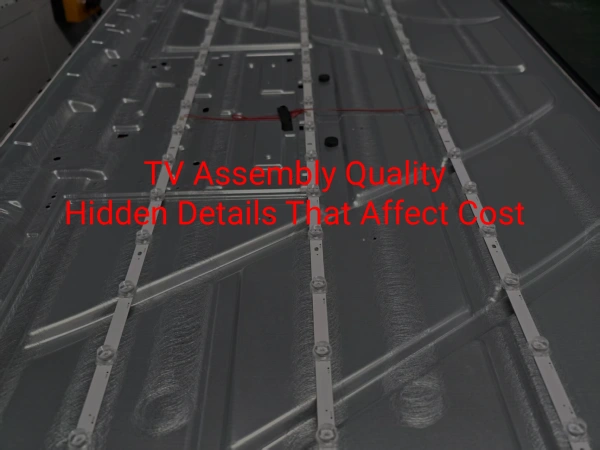
In the B2B television business, price comparison is part of almost every purchasing decision.
When buyers request quotations from different TV manufacturers, they sometimes find significant price differences between products that appear to have similar specifications. Screen size, resolution, panel configuration, operating system, and hardware components may look almost identical on paper. Yet, one factory may offer a noticeably lower price than another.
At Mianhong, we occasionally receive feedback from customers who consider our quotations relatively high compared with offers from other suppliers. After looking more closely at manufacturing practices, we have found that some of these price differences can come from details that are rarely mentioned in a product specification sheet.
The way an LED backlight strip is bonded, how a metal back cover is prepared before installing the diffuser plate, and whether the required insulation protection is properly applied to a TV motherboard are just a few examples.
These may seem like minor manufacturing details, but they can affect material consumption, assembly time, production costs, and ultimately the reliability of the finished TV.
In this article, we will look at several often-overlooked details in TV assembly and explain how different manufacturing methods can influence the final product cost. Whether you are a TV importer, brand owner, distributor, or simply a consumer interested in how televisions are made, understanding these details can help you make a more informed comparison.
A lower quotation does not always mean the same product at a lower cost. Sometimes, the difference lies in how the TV is actually manufactured.
Why Do Similar TVs Have Different Manufacturing Costs?
Consider a common situation in the TV export business. Three buyers are looking for the same product category: a 32-inch frameless Android TV with analog TV reception.
Buyer 1: The Basic Buyer
“We need one container of 32-inch frameless Android TVs with ATV reception. Please send us your best price.”
Buyer 2: The Specification-Focused Buyer
“We need 32-inch frameless Android TVs running Android 15, with a voice-control remote and A-grade LCD panels. Please quote your best price.”
Buyer 3: The Experienced Buyer
“We need 32-inch frameless Android TVs with ATV reception, Android 15, the latest compatible chipset, A-grade LCD panels with strict bright-dot requirements, and SKD packaging. Please provide your detailed quotation.”
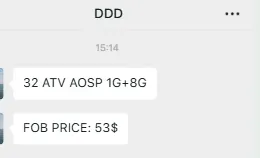
| Item | Mianhong | Factory B |
|---|---|---|
| Product | 32-inch Android TV | 32-inch Android TV |
| LCD Panel | Same specification | Same specification |
| Mainboard | Same configuration | Same configuration |
| Operating System | Same | Same |
| Payment Terms | Same | Same |
| Quoted Price | $54 | $53 |
The difference is only $1 per unit.
For a 40HQ container containing 2800 TVs, that small difference becomes $2800.
But where does this difference come from?
For this comparison, let’s assume that the main components, product specifications, packaging requirements, and payment terms are identical.
The answer may lie in something that is not listed in the quotation: the manufacturing methods used inside the factory.
Product Specifications Don't Tell the Whole Story
Most TV quotations focus on visible specifications and major components, such as screen size, resolution, LCD panel grade, chipset, memory, operating system, and accessories.
These details are essential when comparing products, but they do not describe every aspect of the manufacturing process.
Two TVs may look almost identical on a specification sheet while being assembled using different materials, bonding methods, and internal structural designs.
Some of these differences are hidden inside the TV and cannot be identified simply by looking at the finished product.
Manufacturing Methods Can Affect the Final Quotation
Manufacturing costs are not determined by the Bill of Materials (BOM) alone.
The way components are installed, the materials used during assembly, the amount of adhesive applied, and the additional processes required to ensure structural stability and electrical safety can all contribute to production costs.
For example, fixing an LED backlight strip with double-sided tape may involve a different material and assembly process from using an adhesive dispensing machine. Similarly, preparing a metal back cover before installing the diffuser plate requires additional materials and production steps.
Individually, these details may represent only a small cost difference per TV. However, when multiplied across thousands of units, they can become a noticeable part of the total purchasing cost.
Let’s look at three real manufacturing details that buyers often overlook.
Hidden Details 1: Backlight Bonding - Tape vs. Adhesive Dispensing
The LED backlight is an essential part of an LCD TV. It provides the light that passes through the LCD panel, allowing the screen to display images with the required brightness and color.
During TV assembly, the LED backlight strips need to be securely attached to the rear metal plate. Although this may seem like a simple step, the bonding method can affect assembly consistency and long-term reliability.
In most conventional LED TVs, heat is mainly dissipated through passive cooling rather than fans or other active cooling systems. As a result, the backlight area can experience elevated temperatures during operation. The bonding material must therefore maintain sufficient adhesion under heat exposure and repeated temperature changes.
There are two common approaches to fixing LED backlight strips: adhesive dispensing and double-sided tape. Let’s look at how these methods differ.
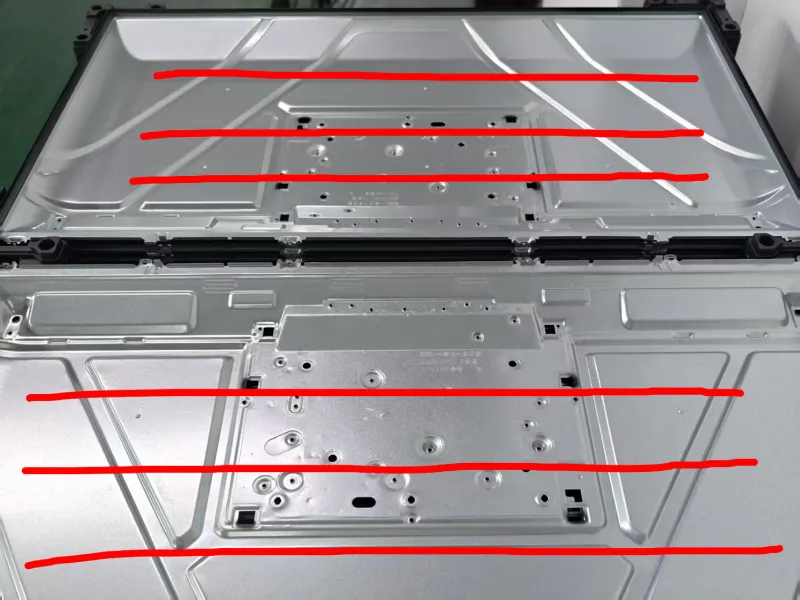
Adhesive Dispensing: A stronger approach to backlight fixing
At Mianhong, we use an adhesive dispensing machine to apply glue to the designated bonding areas on the TV rear plate before installing the LED backlight strips.
Depending on the production line configuration, this process can be semi-automated or fully automated. The machine follows a preset program to control the adhesive application path and dispensing process, helping maintain consistent glue coverage across different units.
Compared with manual application, machine dispensing provides better control over the amount and distribution of adhesive. It also reduces variations caused by manual operation, making the bonding process more consistent during mass production.
Below is a video that Our adhesive dispensing machine applies glue to the designated areas of the TV rear plate before backlight installation.
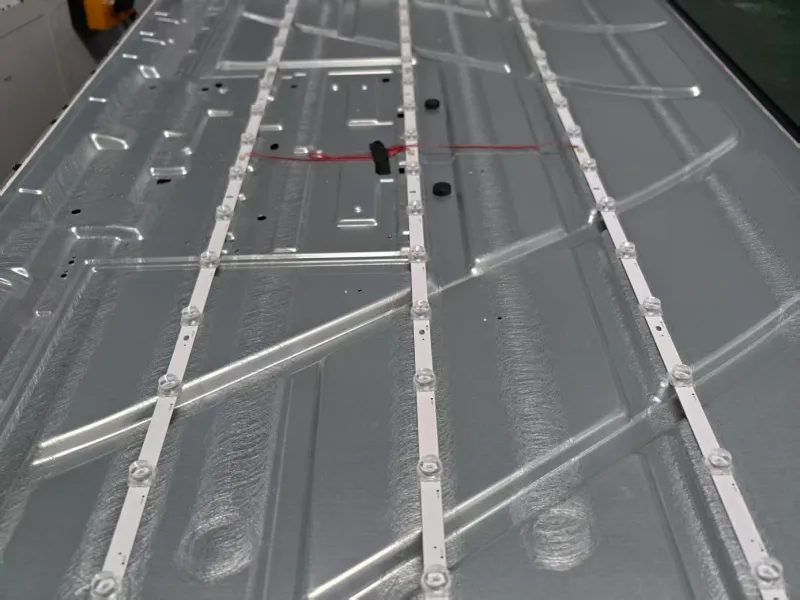
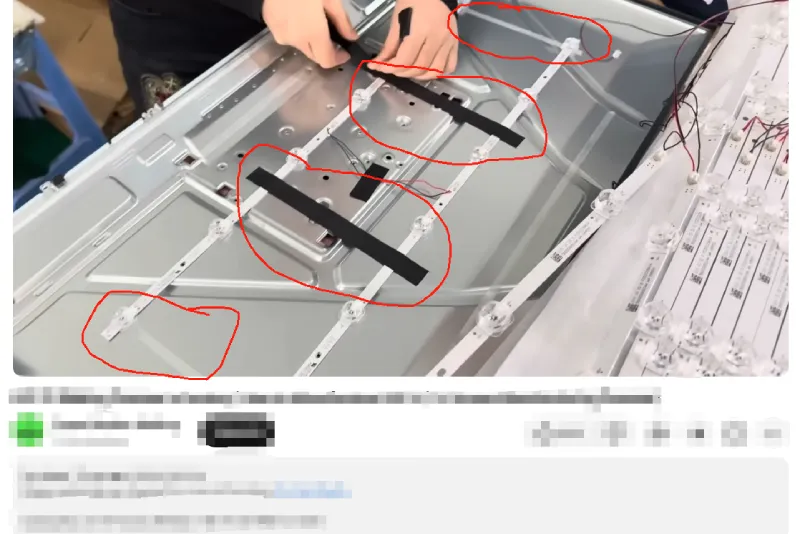
Acetate Cloth Tape/Double-sided Tape: A Manual Bonding Method
Another approach used in TV assembly is double-sided tape or acetate cloth tape.
In this method, workers manually apply adhesive tape to the rear plate or directly to the designated bonding areas of the LED backlight strips. A common application pattern is a cross-shaped or grid-like arrangement, where several strips of tape are used to secure the backlight strips in position.
This method requires less specialized equipment and can reduce the initial investment in production machinery. Depending on the tape specification and application method, it may also reduce the bonding cost per TV.
However, the final bonding performance depends heavily on the tape’s adhesive properties, heat resistance, coverage area, surface preparation, and consistency of manual application. These factors should be considered when evaluating the suitability of this method for long-term TV production.
How Much Does the Bonding Method Affect TV Cost?
The difference between these two methods is not limited to the equipment used.
For a 32-inch TV, the estimated cost of our adhesive dispensing process is approximately US$0.50 per unit. Double-sided tape + acetate cloth tape can have a much lower material cost and requires less investment in specialized dispensing equipment.
For a large-volume OEM order, even a small difference in unit cost can become noticeable. For example, a US$0.50 difference across 1,000 TVs represents US$500 in total.
So, which bonding method would you choose for your OEM TV project?
The answer depends on your target market, product positioning, quality requirements, and purchasing budget. The important thing is to understand what manufacturing process is included in the quotation, rather than comparing prices alone.
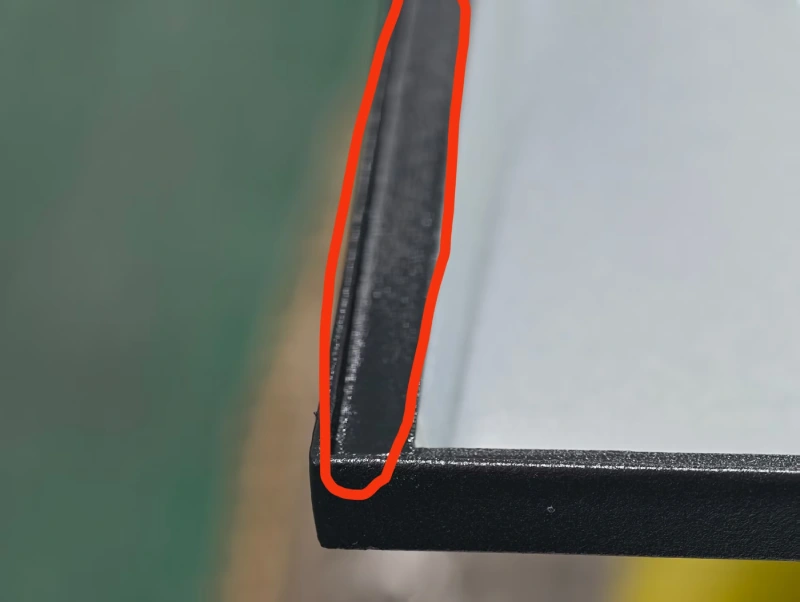
Hidden Detail 2: Metal Back Cover Leveling for Consistent Adhesion
The leveling treatment helps compensate for minor surface irregularities around the metal back cover, allowing the adhesive strips to make more uniform contact with the metal surface before the diffuser plate and other optical components are installed.
Why Is This Important?
Proper leveling of the metal back cover is important for achieving consistent adhesive contact.
Metal sheets may have minor surface irregularities after stamping and forming. If these uneven areas are not properly compensated for, gaps may remain between the metal surface and the adhesive strips. This can result in uneven bonding conditions and potentially reduce the overall adhesion strength.
This is particularly important for frameless TV designs, where the screen assembly relies on carefully designed bonding and structural support.
We have heard about a case from a customer in Peru who experienced screen detachment issues with a batch of frameless TVs supplied by another factory in 2024, when frameless TV designs were becoming increasingly popular. Based on the information available to us, insufficient surface leveling and inadequate adhesive bonding may have been among the contributing factors. However, the exact cause was not independently verified.
This experience highlights why seemingly minor assembly details should not be overlooked. Proper surface leveling, suitable adhesive materials, and consistent application all contribute to more reliable bonding between the metal back cover and the optical assembly.
How Much Does This Additional Reinforcement Cost?
The additional cost of applying leveling material and reinforcing the bonding area is relatively small compared with the overall cost of a TV.
For a typical 32-inch TV, we estimate that this additional process may cost approximately US$0.20 – US$0.5 per unit, depending on the design and material requirements.
As frameless TV designs become increasingly common, proper bonding and structural reinforcement deserve more attention. Saving a small amount during assembly may not be worthwhile if it compromises the reliability of the screen installation.
For TV importers and brand owners, the important question is not simply how much this process adds to the unit price, but whether the manufacturing method provides sufficient support for the screen throughout the product’s expected service life.
Hidden Detail 3: TV Mainboard Insulation: A Small Detail That Matters for Electrical Safety
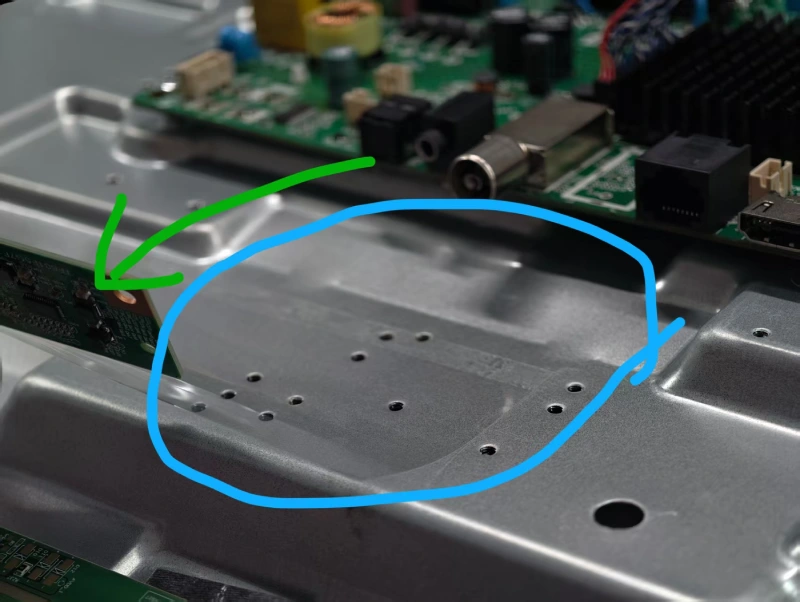
A TV’s metal housing provides structural support and protection, but metal is also electrically conductive. If electronic components are not properly insulated from surrounding metal parts, unintended electrical contact may create a risk of short circuits or electrical damage.
This deserves particular attention in 2026, when TV mainboards and other electronic components can represent a significant portion of the total product cost. If an insulation-related design or assembly issue causes a batch of mainboards to fail, the financial impact can be substantial for both the manufacturer and the buyer.
At Mianhong, we pay attention to a small but important detail during assembly: placing a thin insulating sheet, such as a PVC sheet, at designated positions between the mainboard or the LCD panel’s T-CON (Timing Controller) board and nearby structural components.
When required by the product design, this additional insulation layer helps prevent unintended contact with conductive surfaces and reduces the risk of electrical faults.
How Much Does This Small Insulation Sheet Cost?
The cost of this additional insulation material is surprisingly low.
For a typical TV assembly, a small PVC insulation sheet may cost approximately US$0.08 per piece, depending on its size, thickness, and material specifications.
For an order of 1,000 TVs, that is only around US$80 in additional material cost.
Considering the potential cost of replacing damaged mainboards or handling a batch of defective TVs, this is a small investment in appropriate electrical insulation.
A component that costs just a few cents may help prevent a much more expensive problem. This is why we believe small manufacturing details deserve attention during TV design and assembly.
Other Small Details That May Affect TV Manufacturing Costs
Not all manufacturing cost differences come from major components or additional materials. Some are hidden in everyday assembly operations, such as internal wiring, cable routing, and installation procedures.
Although cables themselves may represent only a small portion of the total TV cost, the time and care required to arrange them properly can make a difference in production efficiency and finished product quality. A well-designed assembly SOP can help workers achieve cleaner, more consistent results while reducing unnecessary manual adjustments.
Our transparent TV project for the Japanese market is a good example of why these details matter.
Internal Wiring: More Than Just Connecting Cables
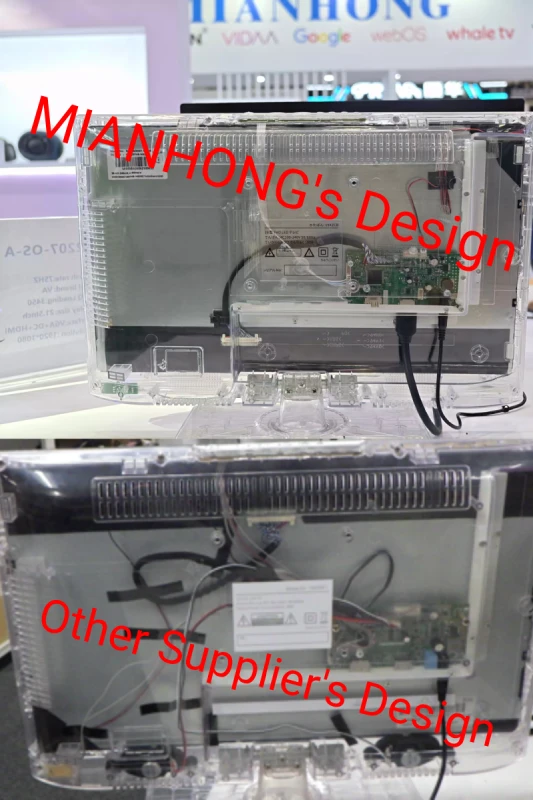
For a conventional TV with an opaque plastic or metal housing, most internal cables are hidden after assembly. However, the situation is different with a transparent TV.
During a project for the Japanese market, our customer evaluated several manufacturers and paid particular attention to internal cable routing. Since the transparent housing allows people to see the components and wiring inside, messy cables can negatively affect the overall appearance, even when the TV functions perfectly.
At Mianhong, we pay attention to cable positioning, routing paths, and assembly procedures to achieve a cleaner internal layout. This requires proper engineering preparation and clear SOP instructions so that workers can reproduce the same result consistently. Our design may take more time for a worker to install the cables since we invert the LCD panel(the COF connections are positioned at the top of the screen).
Below, you can compare the internal wiring of our transparent TV with another factory’s example.
Final Thoughts: Look Beyond the Quotation
When comparing quotations from different TV manufacturers, it is natural to focus on the unit price. However, as we have seen in the examples above, the final cost of a TV is influenced by more than just its main components.
The way LED backlight strips are bonded, how the metal back cover is reinforced, whether appropriate insulation protection is installed, and how internal cables are arranged can all affect manufacturing costs and product quality.
These details may add only a few cents or around one dollar to the cost of an individual TV. However, they can make a meaningful difference when multiplied across thousands of units.
So, how can you make a better comparison between TV manufacturers?
Here are four practical suggestions:
Compare the same specifications and BOM. Make sure the screen size, LCD panel grade, chipset, memory, operating system, accessories, and packaging requirements are clearly defined.
Ask about important assembly methods. Don’t hesitate to ask how backlight strips are fixed, how the screen assembly is supported, and what insulation measures are used where required by the design.
Check the manufacturer’s quality control procedures. Ask about production inspections, aging tests, electrical safety checks, and other relevant reliability tests.
Request real production evidence. Factory photos, assembly videos, and samples can help you understand how a manufacturer actually builds its TVs, rather than relying only on specification sheets and quotations.
At Mianhong, we believe a TV quotation should reflect not only the components used, but also how the product is assembled and how its quality is verified.
A lower quotation does not always mean you are getting the same product at a lower price. Sometimes, the difference lies in the manufacturing details that are not visible on a specification sheet.
Before choosing your next TV manufacturing partner, look beyond the quotation. Understand what is included in the price, how the TV is made, and what quality standards the factory follows.
FAQ
1. Why do two TVs with similar specifications have different prices?
Two TVs may have similar specifications but different manufacturing costs. Differences in backlight bonding methods, structural reinforcement, insulation materials, internal wiring, and quality control procedures can all affect the final quotation. Buyers should compare both the Bill of Materials (BOM) and the manufacturing requirements before making a purchasing decision.
2. Does a lower TV quotation always mean lower quality?
Not necessarily. Some manufacturers achieve lower costs through better production efficiency, optimized designs, or more competitive material sourcing. However, differences in assembly methods and quality control may also contribute to lower prices. The best approach is to verify what is included in each quotation rather than assuming that similar specifications guarantee identical quality.
3. How can I verify the manufacturing quality of a TV factory before placing an OEM order?
You can request actual production photos, assembly videos, product samples, and details of the factory’s quality control procedures. For larger OEM orders, you can also discuss specific requirements such as LCD panel grade, backlight bonding, electrical insulation, aging tests, and packaging standards. A reliable manufacturer should be able to explain its production methods and provide relevant evidence.


Consider Selling your Own TV Brand?
Upload your LOGO, we design and provide a set of images(TV bezel, TV boot screen, color box) to your email.(100% Free)