-
Tel/Wechat/Whatsapp +86 13926285591
-
Email hanke@opeetv.com

-
Tel/Wechat/Whatsapp +86 13926285591
-
Email hanke@opeetv.com
Why Are Some TVs Cheap? Motherboard Cost-Cutting in 2026

As a B2B TV buyer, wholesaler, or independent consumer, have you noticed that TV prices have increased from 2025 to August 2026, but not nearly as dramatically as prices for PC components such as memory and graphics cards? One reason may be hidden inside the TV itself: the motherboard. As chipset, memory, and other electronic component costs continue to fluctuate, some cost-sensitive TV solutions may rely on legacy platforms, end-of-life inventory, or even refurbished components to reduce motherboard costs. But what exactly is being replaced, and what does it mean for TV performance, reliability, and long-term quality? In this guide, we will examine the cost-cutting practices behind TV motherboards in 2026 and explain what buyers should know before choosing a TV manufacturer.
Cheap TV = Cheap Panel
**Now(2026)**
Cheap TV ≠ Cheap Panel
The cost may be hidden in the TV motherboard BOM.

Why Are TV Prices Rising in 2026?
TV prices have also increased in 2026, but the rise has been relatively moderate compared with the PC market. The reason is closely related to how different industries consume semiconductors and memory. AI infrastructure, PCs, and TVs compete for some of the same underlying semiconductor resources, but their hardware requirements are very different. To understand why TV prices are rising, we first need to look at three major forces affecting the global memory and component market.
What Makes Up the Cost of a TV?
The total cost of a TV can be calculated in different ways, depending on whether we include manufacturing, software, logistics, labor, and other expenses. For this article, we will focus only on the material cost (BOM) of a TV. The following are the major physical components that make up a typical TV and their respective roles.
| Component | Role |
|---|---|
| Display Panel | The main display component that produces the TV image and usually represents the largest portion of the hardware cost. |
| Optical & Backlight Module | Includes LED backlights, optical films, light guides, reflectors, and related parts that distribute light evenly across the display panel. |
| TV Motherboard | The core electronic control system containing the SoC, memory, Flash storage, Wi-Fi, interfaces, and other key electronic components. |
| Cabinet (Housing) | The physical enclosure that protects the internal components and provides the structural design of the TV, including the front frame and rear cover. |
| Auxiliary Materials | Small supporting materials such as tapes, screws, brackets, insulating materials, plastic parts, and other components required for assembly. |
| Accessories | External items supplied with the TV, such as the remote control, user manual, power cable, batteries, stands, and other included accessories. |
AI Demand Is Reshaping the Global Memory Market
The current memory shortage is closely connected to the rapid expansion of AI infrastructure. The supply chain can be viewed as:
AI Servers → GPUs → HBM → Server DRAM → Enterprise SSD/NAND
Modern AI servers require enormous amounts of high-performance memory and storage. However, it would be inaccurate to say that AI companies are simply buying up the DDR3 or DDR4 memory used in conventional TVs.
The bigger impact is on memory industry capacity allocation. As semiconductor manufacturers prioritize HBM, server DRAM, and other high-margin AI-related products, production capacity available for traditional memory products can become increasingly constrained.
In other words, AI does not necessarily consume the same memory used in a TV. Instead, AI demand is changing how the entire memory industry allocates its production capacity, creating supply pressure that can eventually reach mature memory technologies.
Why Are PCs More Sensitive to Memory Price Increases Than TVs?
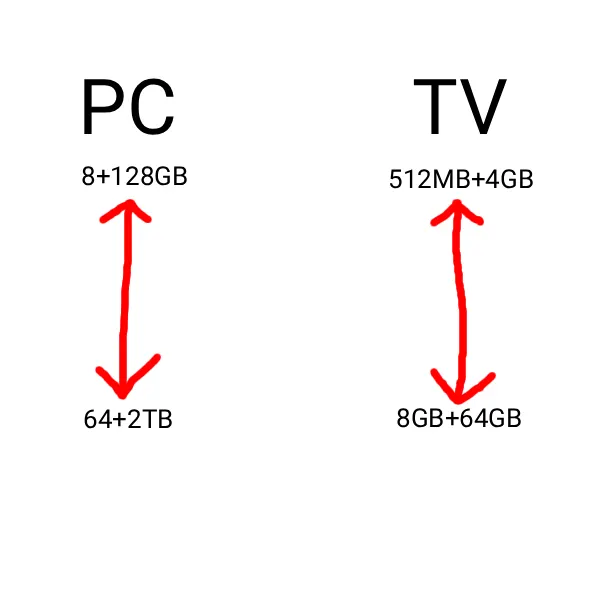
PCs generally have a much higher component intensity and replacement frequency than TVs. One person may use a PC at home and another computer at work, while a household may only have one or a few TVs.
More importantly, a typical PC requires significantly more high-performance semiconductor components, including a CPU, GPU, DDR4 or DDR5 memory, SSD, Wi-Fi, and motherboard chipsets.
A conventional TV has much more modest hardware requirements. Its motherboard may only need a SoC, DDR3 or DDR4 memory, eMMC or SPI Flash, and a Wi-Fi module.
This makes TV hardware relatively “good-enough” driven. A typical TV does not need DDR5, an NVMe SSD, a high-end CPU, a discrete GPU, or massive memory bandwidth. It simply needs the operating system and applications to run smoothly and TV channels to play reliably without noticeable lag.
For this reason, TV hardware has historically been somewhat insulated from the extreme component demand seen in AI servers and high-performance PCs.
When the Memory Shortage Reaches Older Technologies
However, the situation is changing.
The problem is no longer limited to high-end memory. As manufacturers continue to prioritize newer and higher-margin products, supply pressure is gradually extending into mature and legacy memory technologies.
This creates an important chain reaction:
AI demand increases
↓
Memory manufacturers prioritize HBM and server products
↓
Production capacity for mature DRAM becomes tighter
↓
DDR4 and DDR3 supply becomes more constrained
↓
Memory prices increase
↓
TV motherboard BOM costs begin to rise
This is why a TV manufacturer can eventually be affected by the AI-driven memory boom even though an AI server would never use a conventional TV motherboard.
The connection is not direct consumption. It is competition for semiconductor manufacturing capacity.
For most TVs, the display panel remains the largest hardware cost, but the motherboard is one of the most important areas where semiconductor price fluctuations can directly affect the final BOM.
How Do TV Manufacturers Reduce Motherboard Costs?
When TV motherboard costs increase, manufacturers still need to keep their quotations competitive, especially in price-sensitive markets. This creates an important question: how can a TV manufacturer reduce motherboard costs without compromising product reliability? There are several approaches, ranging from using mature chipset platforms and existing component inventory to adjusting memory specifications and, in some cases, using refurbished or reclaimed components.
What Components Are on a TV Motherboard?
Some manufacturers may reduce motherboard costs by switching to lower-cost components.
| Component | Role |
|---|---|
| SoC / Chipset | Signal processing and system control |
| DDR RAM | Memory to handle system |
| eMMc / Flash | App/Media storage with smart OS |
| WIFI Module | Wireless connectivity |
| Power IC | Power Management |
| I/O Module | Interfaces such as USB, RF receiver |
| etc | etc |
Using a Legacy Chipset Platform
A legacy chipset platform does not necessarily mean that the chip is used or refurbished. In many cases, it simply refers to a mature chipset that was designed several years ago but remains available and stable for production. Since these platforms have already been developed, tested, and widely used, manufacturers can avoid some of the development and component costs associated with newer solutions.
For entry-level TVs that only need basic smart functions, streaming, and digital TV reception, a mature chipset may still provide sufficient performance. Using a legacy platform can therefore be a legitimate way to keep the TV motherboard BOM under control.
Using End-of-Life or Excess Inventory
Another way to reduce motherboard costs is to use end-of-life (EOL) components or excess inventory. These components may be completely factory-new, but they are no longer part of a manufacturer’s latest production roadmap or have been left over from previous production orders.
If the specifications remain compatible with the motherboard design, manufacturers or component suppliers may purchase these parts at a lower cost. However, long-term availability can be a concern. Once the remaining inventory is exhausted, sourcing the same component may become difficult, which can create challenges for long-term TV OEM production and after-sales replacement.
Legacy does not mean refurbished. EOL does not mean used.
Reducing RAM and Storage Specifications
RAM and storage are another area where manufacturers can adjust motherboard costs. For example, a TV designed with 2GB of RAM and 16GB of storage may be configured with 1GB of RAM and 8GB of storage for a more budget-oriented product.
This approach can reduce the BOM cost while keeping the same display panel and basic TV functions. However, the specifications should be matched to the operating system and application requirements. Insufficient RAM can affect multitasking and system responsiveness, while limited storage can restrict app installation and future software updates. For entry-level TVs, the goal is not simply to use less memory, but to find the lowest specification that still provides an acceptable user experience.
Now the major low-end Android TV (AOSP) are using 1G+8G, but some of clients choose to have 512MB + 4G instead to reduce the cost.
Using Refurbished or Reclaimed Components
Using refurbished or reclaimed components is another possible way to reduce TV motherboard costs. Unlike a legacy chipset or EOL inventory, these components may have previously been used in another electronic device before being processed and resold. While this approach can offer significant cost advantages, it also introduces additional questions about component history, reliability, traceability, and long-term availability.
What Is a Refurbished IC?
A refurbished IC is an integrated circuit that has previously been manufactured and may have been used, recovered, or otherwise processed before being sold again. Depending on the supply chain, the component may undergo processes such as cleaning, testing, reballing, or remarking before entering the market.
A refurbished IC should not be confused with an older but brand-new chip. A chipset can be several years old and still be factory-new if it has never been used. The key difference is the component’s previous usage and processing history.
What Is a Reclaimed or Pulled IC?
A reclaimed or pulled IC is typically a component removed from an existing electronic device, such as a discarded or obsolete circuit board. After removal, the IC may be cleaned, tested, and prepared for reuse on another PCB.
These components can be considerably cheaper than factory-new parts, but their previous operating conditions and usage history may be difficult to verify. For mass-production TVs, this makes component traceability and consistent supply important considerations.
Which TV Motherboard Components Can Be Refurbished?
In practice, various electronic components on a TV motherboard can potentially enter secondary or refurbished markets. These may include SoCs, DDR memory, eMMC or NAND Flash, Wi-Fi chips or modules, power management ICs, and other semiconductor components.
However, not every component carries the same level of risk. Memory and storage components, for example, can be particularly important because their previous usage and remaining operating life may be difficult to determine. For this reason, buyers should look beyond the motherboard specification itself and ask how key components are sourced, whether they are factory-new, and whether their supply can be traced.
Comparison Table of TV Motherboard Approaches
| Solution | Explaination |
|---|---|
| Legacy Chipset | An older chipset design that can still be factory new. |
| End of Life Inventory | Components from an end of life product line that can still be factory new. |
| Refurbished IC | An IC that has been previously used, recovered, or reprocessed before being resold. |
| Reclaimed / Pulled IC | An IC removed from another PCB for reuse. |
How Can Buyers Check the Quality of a TV Motherboard?
This section is mainly for B2B buyers and TV brand owners. For consumers, motherboard quality is usually handled through the TV brand’s after-sales service. For a B2B buyer, however, the situation is different: you are dealing directly with the TV manufacturer, so verifying the motherboard configuration and component condition before and during production can help prevent quality issues before the products are shipped.
Note: Component date codes can help with verification, but they should not be treated as definitive proof that a component is new or refurbished. A component manufactured several years ago can still be factory-new if it has never been used.
Why the Cheapest TV Quotation May Not Be the Cheapest Option?
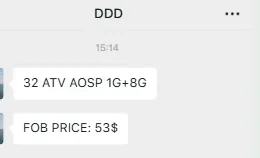
Imagine you are a B2B buyer comparing quotations from several TV manufacturers for the same product: a 32-inch AOSP TV with 1GB RAM, 8GB storage, LCD Panel with A-level grade, and analog standard only. After collecting the quotations, you notice that most suppliers are offering very similar prices, with differences of only a few cents. However, one supplier is quoting nearly $4 less per unit. Would you simply choose the lowest quotation, or would you ask what is behind the price difference?
| Manufacturer(Simulation) | Price(Simulation) |
|---|---|
| AAA Electronics | 56.5$ |
| BBB Electronics | 56$ |
| CCC Electronics | 57.5$ |
| DDD Electronics | 53$ |
| EEE Electronics | 56$ |
| FFF Electronics | 55.5$ |
A $4 Lower Quotation Does Not Always Mean $4 in Savings
A TV quotation that is $4 lower does not necessarily mean that the buyer is actually saving $4 per unit. If the lower price comes from compromises in motherboard quality, system stability, or component sourcing, the initial saving can quickly be offset by higher failure rates, warranty claims, replacement costs, spare-part shortages, or production delays. For a B2B buyer ordering thousands of units, even a small increase in failure or after-sales rates can have a much larger financial impact than the original price difference. This is why the lowest quotation should not always be evaluated as the lowest total cost. The real goal is not simply to buy a TV at the lowest price, but to achieve a reliable product at a predictable total cost.
Our Approach to TV Motherboard Quality
At Mianhong, we believe that TV motherboard quality starts long before the production line. It begins with how key electronic components are sourced and continues through motherboard assembly, testing, and quality control. For our OEM projects, we focus on using reliable, traceable components and applying stricter testing procedures to reduce potential quality risks before the TVs reach our customers.
Starting with Brand-New Components
We start with the component sourcing stage. For our TV motherboard solutions, we prioritize brand-new, factory-original components from reliable supply channels rather than refurbished, reclaimed, or pulled components. This helps us maintain better control over component quality and traceability while reducing the risk of previously used components entering the production process.
More Rigorous Burn-In Testing
A motherboard may pass a basic functional test and still experience problems after extended operation. That is why we apply burn-in testing to evaluate motherboard stability under continuous operating conditions. By running TVs for extended periods and monitoring system performance, booting, connectivity, display, audio, and other key functions, we can identify potential stability issues before shipment.
Consistent Quality Control from Components to Finished TVs
Motherboard quality is not determined by a single component or a single test. We also verify production batches against the approved specifications and perform quality inspections throughout the manufacturing process. This helps ensure that the motherboard configuration delivered to the customer remains consistent with the agreed OEM specifications.
We don’t aim to achieve the lowest quotation by compromising the core components of the TV motherboard. We aim to provide a reliable TV with predictable quality and long-term value for our OEM customers.
Conclusion
The cost of a TV is not determined by the display panel alone. As memory and semiconductor costs continue to change in 2026, the TV motherboard has become an increasingly important part of the overall BOM. Manufacturers can reduce costs through mature chipset platforms, EOL inventory, optimized specifications, or other sourcing strategies, but these approaches are not equal in terms of quality and long-term reliability. For B2B buyers, the lowest quotation should therefore be only the starting point of the evaluation. Understanding the motherboard configuration, component sourcing, and quality control behind the quotation is essential to making a reliable purchasing decision.
FAQ
1. Are refurbished TV motherboard components always bad?
Not necessarily. A refurbished component may still function properly after inspection and testing, but its previous usage history, remaining lifespan, and traceability can be more difficult to verify than those of a factory-new component. For mass-production TVs, especially for long-term OEM projects, these factors can create additional quality and supply risks. Therefore, buyers should not judge a component only by its current functionality, but also consider its sourcing, history, testing, and long-term availability.
2. Is an old chipset the same as a refurbished chip?
No. An old or legacy chipset can still be completely factory-new. “Legacy” usually refers to the age or maturity of a chipset platform, while “refurbished” refers to a component that has previously been used, recovered, or reprocessed before being sold again. A manufacturer can use a mature chipset with brand-new components and still produce a reliable TV motherboard. The key difference is the component’s usage history, not simply its manufacturing date or chipset generation.
3. Why are some TV OEM quotations much cheaper?
There are many possible reasons. A manufacturer may use a mature chipset platform, EOL or excess inventory, lower RAM or storage specifications, or different panel and component configurations. In some cases, lower-cost or refurbished components may also be used. Therefore, two TVs with similar headline specifications can still have different BOM costs. When a quotation is significantly lower than the market range, B2B buyers should compare the detailed motherboard, panel, memory, storage, and component specifications rather than looking only at the final unit price.
4. How can I know if a TV motherboard uses new components?
For B2B orders, the best approach is to confirm the component requirements before production and include them in the approved technical specifications or contract. Buyers can ask whether key components such as the SoC, DDR memory, and Flash/eMMC are factory-new. During production, a QC or third-party inspection can check the motherboard model, PCB markings, component markings, and available date codes, and compare them with the approved specifications. However, date codes are only supporting evidence and cannot alone prove whether a component is new or refurbished.
5. Why do TV motherboard prices vary between manufacturers?
TV motherboard prices can vary because of differences in chipset platforms, RAM and Flash capacity, Wi-Fi solutions, PCB design, component sourcing, software requirements, certifications, production volume, and testing standards. Two manufacturers may quote the same “32-inch AOSP 1GB+8GB TV,” while using different motherboard platforms or component sources underneath. This is why a large quotation difference should be investigated at the BOM and specification level, rather than assuming that the cheaper supplier simply has a lower profit margin.


Considering selling your own brand of TVs without a risk of refurbished component?
Upload your LOGO, we design and provide a set of images(TV bezel, TV boot screen, color box) to your email.(100% Free)