LCD panel prices are now becoming the latest cost pressure for the global TV supply chain. After months of rising costs across TV components, including TV motherboard related components, the pressure has now reached one of the most important parts of a television: the LCD panel.
This means that the cost pressure is no longer limited to TV components such as motherboards. LCD panels, which represent one of the largest cost components of a television, are now also entering a new price adjustment cycle.
For TV manufacturers, importers and private label brands, this could put further pressure on the cost of finished TVs. If panel costs continue to rise alongside other TV components, manufacturers may need to review quotations, production costs and order planning more frequently.
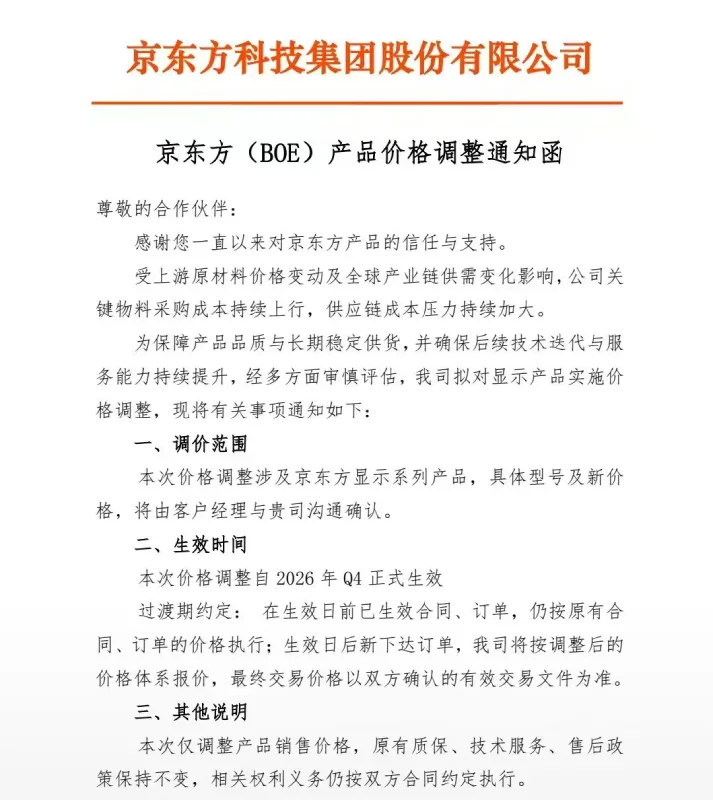
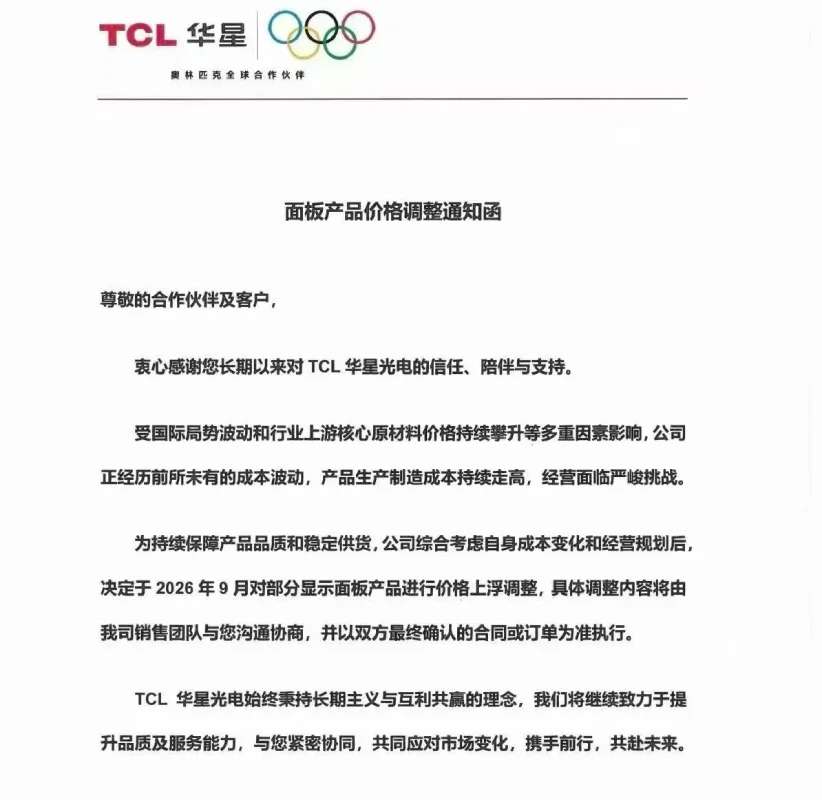
In this article, we look at the recent LCD panel price adjustment notices from CSOT, BOE and HKC, what is driving the increase, and what TV buyers should consider when placing new orders in the coming months.
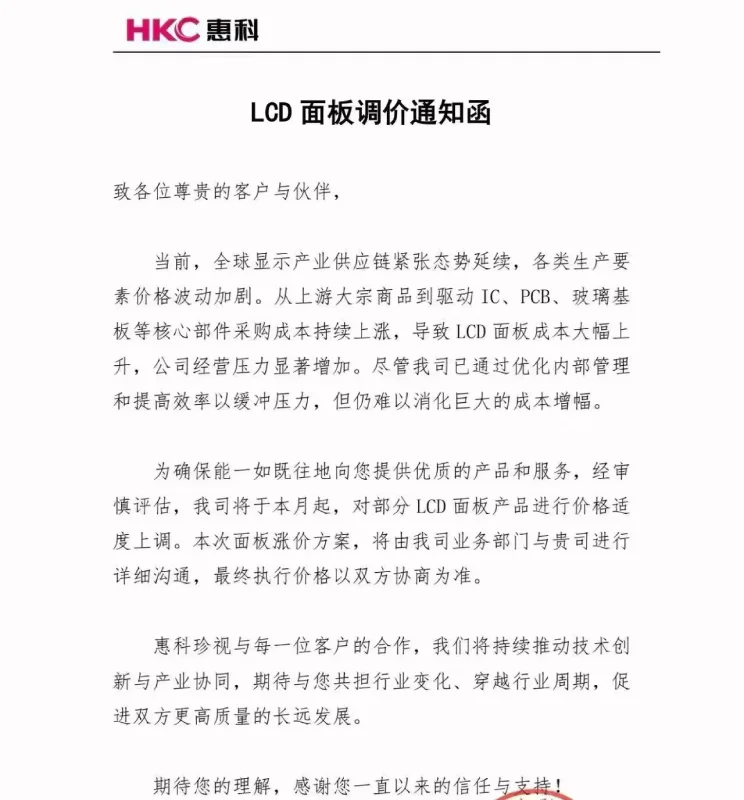
HKC LCD Panel Price Adjustment Notice
English Translation of the HKC's Notice(For Reference)
HKC LCD Panel Price Adjustment Notice
Dear Valued Customers and Partners,
The global display industry supply chain continues to face tight supply conditions, while prices of various production inputs have become increasingly volatile. Procurement costs for key components and materials, ranging from upstream commodities to driver ICs, PCBs and glass substrates, continue to rise. As a result, LCD panel costs have increased significantly, placing considerable pressure on the company’s operations.
Although we have taken measures to mitigate these pressures by optimizing internal management and improving operational efficiency, we are still unable to fully absorb the substantial increase in costs.
To continue providing you with high quality products and services, after careful evaluation, we will implement a moderate price increase for selected LCD panel products starting this month. The specific panel price adjustment will be discussed in detail between our business team and your company, with the final prices subject to mutual agreement.
HKC values its cooperation with every customer. We will continue to promote technological innovation and industry collaboration, and look forward to working with you to navigate changes in the industry, weather the industry cycle, and achieve higher quality long term development for both parties.
Thank you for your understanding and for your continued trust and support.
Shenzhen HKC Optoelectronic Technology Co., Ltd.
September 8, 2026
Key point: HKC states that it will implement a moderate price increase for selected LCD panel products starting in September 2026. Unlike the BOE and TCL CSOT notices, HKC explicitly identifies rising costs for driver ICs, PCBs, glass substrates and upstream commodities as factors behind the increase. The specific adjustment will be discussed individually with customers, with final prices subject to mutual agreement.
What Does This Mean for TV Manufacturers and Buyers?
The impact of higher LCD panel costs will extend beyond panel manufacturers. For TV manufacturers, importers and distributors, rising panel prices can increase the cost of finished TVs while putting further pressure on already limited margins.
At the same time, the impact may not be reflected immediately in every TV quotation. Existing panel inventory, purchasing cycles and contracts can temporarily delay the full effect of higher panel costs. Based on our current market assessment, some TV LCD panel inventory may absorb part of the initial price pressure for the next one to two months. If higher panel costs persist, however, the impact could become more visible in TV quotations and production costs toward 2027.
For TV Manufacturers
LCD panels are one of the largest components of a finished TV’s manufacturing cost. When panel prices rise, the impact can quickly flow into the total BOM cost of the television.
For TV manufacturers operating on relatively tight margins, even a moderate increase in panel costs can reduce the available margin on each unit. Manufacturers therefore need to reassess their quotations, panel sourcing and production costs more frequently when panel prices become volatile.
For buyers negotiating large OEM or private label orders, this also means that a quotation based on today’s panel cost may not remain commercially viable for an extended period. If the increase in component costs is not reflected in the final selling price, manufacturers may eventually face a difficult choice between maintaining the original quotation and protecting their production margin.
For TV Buyers, Importers and Distributors
For TV importers and distributors, higher panel costs can create pressure at both ends of the business. The cost of purchasing finished TVs may increase, while the ability to raise retail prices may remain limited by market competition and consumer demand.
This can further reduce the margin available on each TV sold. In markets where consumers can easily shift their spending to alternative entertainment products, distributors may also become more cautious about accepting higher TV prices at the retail level.
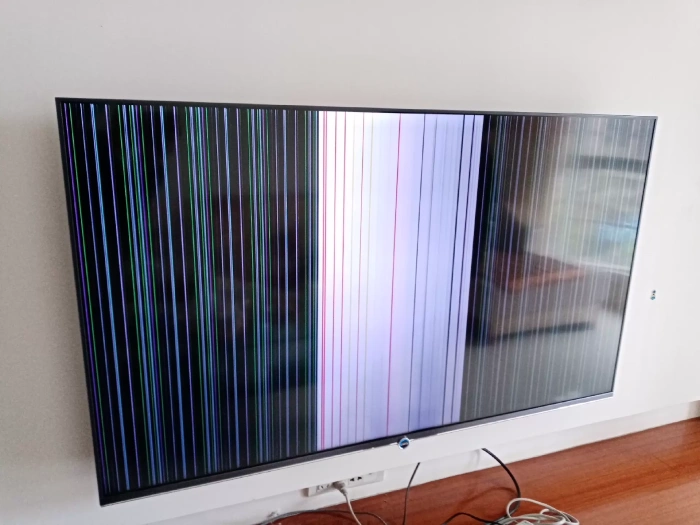
There is another issue that becomes increasingly important when panel costs rise: damage during transportation.
A damaged TV is not simply a damaged component. When an LCD panel is damaged after a finished TV has arrived at the destination, the importer may face the loss of an entire finished unit, including the panel, mainboard, housing, assembly and logistics costs. As panel prices account for a substantial portion of TV manufacturing costs, the financial impact of a single damaged unit can become more significant as panel prices increase.
For this reason, importers and distributors may place greater emphasis on packaging, transportation protection, inspection procedures and after sales support when panel costs are under pressure.
Our Point of View: For TV manufacturers and buyers alike, the key issue is not simply whether panel prices increase, but how quickly the increase is reflected in finished TV costs. Existing inventory and purchasing cycles may delay the impact, while sustained higher panel costs could gradually feed into new quotations and production costs.
What Should TV Buyers Consider When Placing New TV Orders?
As both TV mainboards and LCD panels enter a period of rising costs, TV buyers may face additional supply chain risks. When component prices increase, less transparent practices, such as the use of reclaimed electronic components or refurbished LCD panels, may become more common in some parts of the market.
For TV buyers, this makes supplier verification and quality control even more important when placing new orders. Here are several points worth considering before confirming your next TV order.
Understand LCD Panel Grades Before Placing an Order
Not all LCD panels have the same quality, even when they have the same screen size and resolution. Panel grade, source, production condition, and defect standards can all affect the final TV quality.
Buyers should clearly specify the required panel grade and acceptable defect standards in the purchase agreement. If panel specifications are not clearly defined, it can become difficult to determine whether a delivered batch meets the original requirements.
For large orders, buyers can also request panel information and quality documentation from the manufacturer before production begins. Here is an article below that you can learn some basic concept, such as defect pixels:
Arrange Third Party Inspection for Panels and Mainboards
When component costs are rising, third party inspection can provide an additional layer of quality control before shipment.
A professional inspection company can check the finished TVs as well as key components such as LCD panels and mainboards. Depending on the order requirements, inspections may include screen defects, dead pixels, backlight performance, appearance, ports, functions, and other agreed quality standards.
For buyers working with a new supplier or placing a large order, an independent inspection before shipment can help identify problems before the goods leave the factory. You can understand the concept “TV motherboard with refurbished component” via our article below:
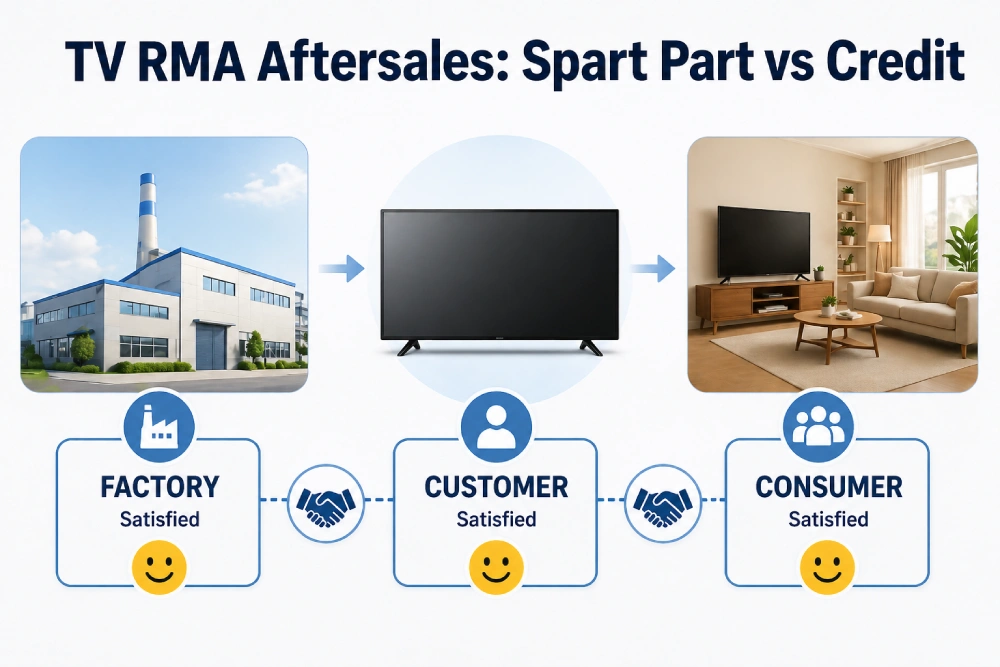
Define RMA and After Sales Procedures in the Contract
Quality problems can still occur even when production and inspection procedures are in place. This is why the RMA and after sales process should be agreed before the order is confirmed.
The contract should clearly define how defective TVs or components will be reported, what information is required in an RMA report, how defects are verified, and how replacement parts or compensation are handled.
A clear RMA procedure gives both the buyer and manufacturer a defined process to follow when quality issues occur after delivery. You can refer to this article and have a clear idea of how a RMA report looks like:
Plan Your Import Schedule Earlier
TV buyers should also take the full import cycle into account when planning their next orders. For a standard TV order, production usually takes around 30 days after the final sample and specifications are confirmed. The actual time required before the TVs are ready for sale, however, also depends heavily on the shipping route and destination.
For example, a TV buyer in Africa may need around three months for ocean shipping depending on the destination and shipping route. This means the buyer could have roughly four months between final order confirmation and the TVs arriving at the destination. For buyers in North America, ocean transportation may take around one to two months, creating a shorter but still significant lead time.
This becomes particularly important when planning for major sales seasons and holidays. If TVs are intended for a seasonal promotion, waiting until demand is already approaching can leave very little room to handle production or shipping delays.
We also expect the current component cost pressure to make production planning more important. Rising mainboard prices can be accompanied by tighter chip availability, which may affect the ability of mainboard suppliers to deliver components to TV manufacturers on schedule. At the same time, higher LCD panel prices can add further pressure to the procurement and production process.
For TV buyers, this does not necessarily mean that every order will take longer. However, it does mean that buyers should allow more time for component procurement and production when planning future orders.
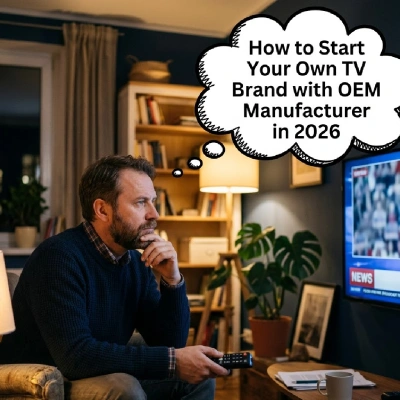
A practical approach is to work backward from the date when the TVs need to be available in the local market. Consider the required production time, ocean transit time, customs clearance, and a reasonable buffer for unexpected delays. For buyers preparing for a major sales season next year, discussing the purchasing schedule with the TV manufacturer well in advance can help both sides plan components and production capacity more effectively. If you are new in the TV industry or if you want to sell your own TV brands in your country, you can check our guide below about the process:
Conclusion
Rising LCD panel and mainboard costs are changing the way TV buyers need to plan their next orders. The key issue is not simply whether TV prices will increase, but whether buyers can secure the right components, quality, production capacity, and delivery schedule at the right time.
For buyers, this means paying closer attention to panel specifications, component quality, third party inspection, RMA procedures, and the complete lead time from production to arrival at the destination. Planning orders earlier can also give both the buyer and manufacturer more time to manage component procurement and unexpected supply chain delays.
In a market where component costs and availability can change quickly, a reliable TV manufacturing partner and a clearly defined purchasing plan can make the procurement process more predictable.